The best things to do in Iceland are mostly outdoors: walking behind waterfalls, watching icebergs drift across a glacier lagoon, standing in the rift between two tectonic plates, bathing in a hot river and looking for whales and the northern lights. Our highlights map numbers 29 of the top sights, from the Golden Circle near Reykjavík to the canyons of the north and east. This guide goes through them region by region, with what each one is like, when you can get there and what to book ahead.
What are the best things to do in Iceland?
If you only have time for a handful, these are the experiences most people remember from a first trip. Most sit on or near Route 1, the Ring Road, so a car and a week or more will take you to nearly all of them.
- Drive the Golden Circle for Þingvellir, the Strokkur geyser and Gullfoss, all within a day of Reykjavík.
- Walk behind Seljalandsfoss and climb the steps beside Skógafoss on the south coast.
- See the icebergs at Jökulsárlón and the ice on the black sand of Diamond Beach.
- Walk on a glacier or enter an ice cave with a certified guide.
- Bathe in a geothermal pool, from the Reykjadalur hot river to a town swimming pool.
- Feel the power of Dettifoss, one of the most powerful waterfalls in Europe.
- Go whale watching from Húsavík or Akureyri between spring and autumn.
- Photograph Kirkjufell and the coast of the Snæfellsnes peninsula.
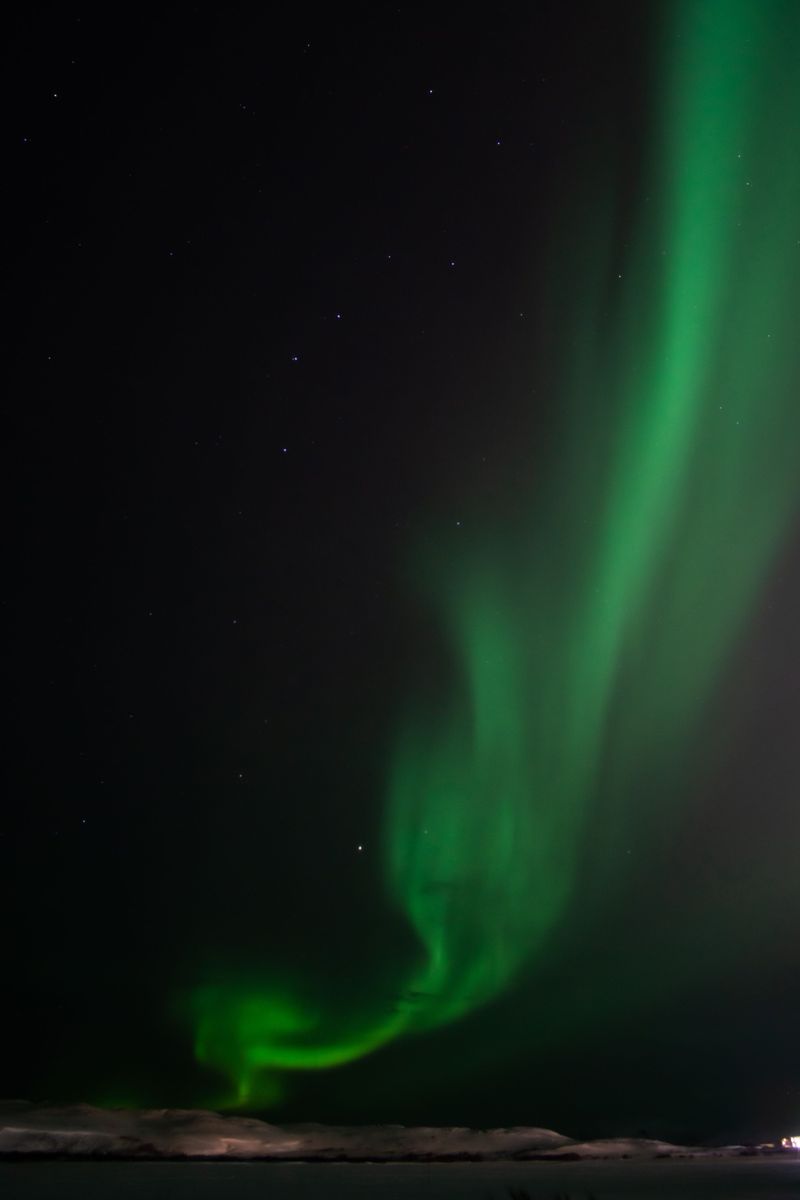
- Hunt for the northern lights on a clear, dark night from September to April.
- Cross into the highlands in summer for Landmannalaugar's coloured mountains.
You can also browse every photo on our Iceland highlights page, which has an interactive map and filters by type of sight.
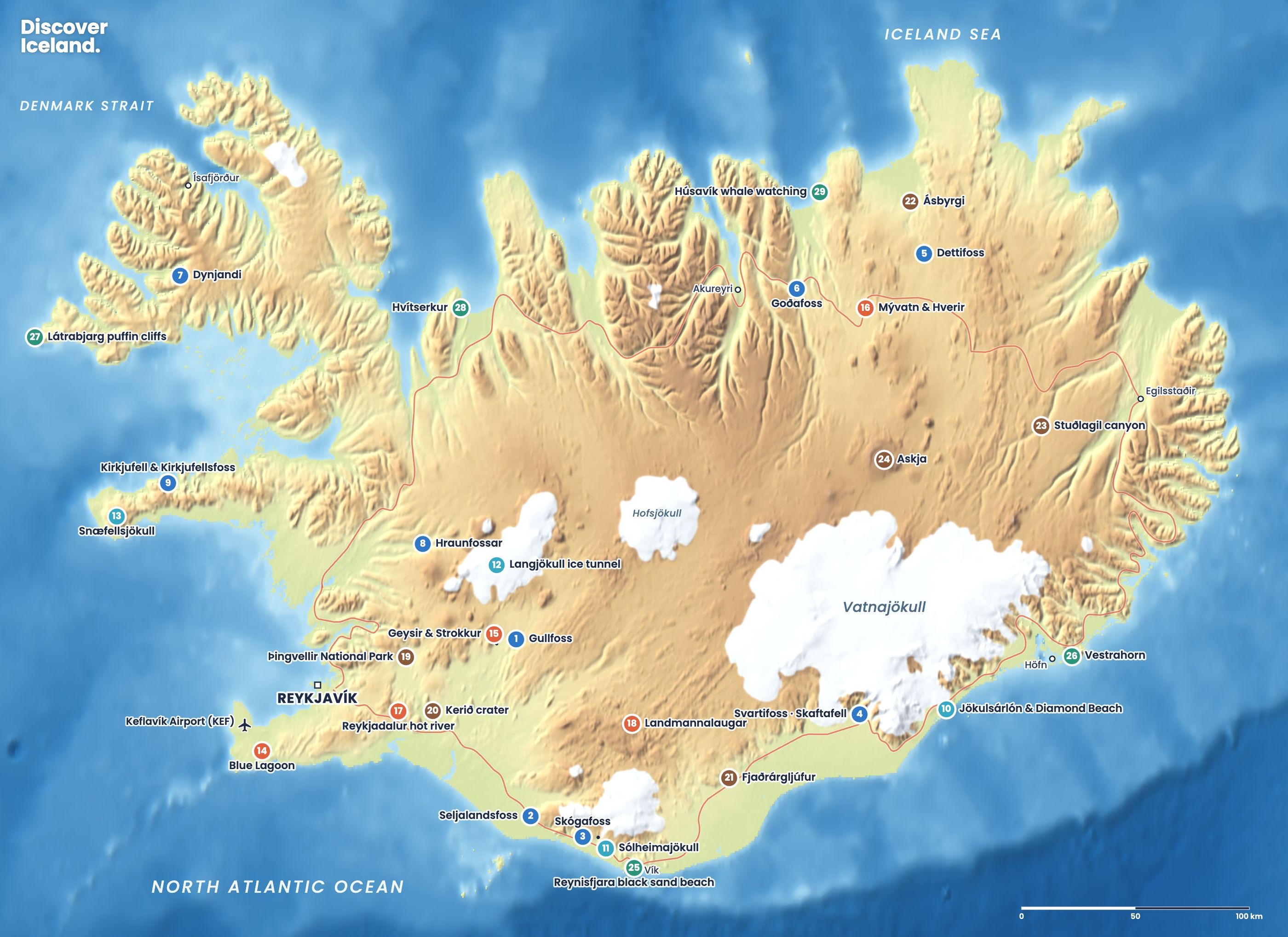
What can you see on the Golden Circle and near Reykjavík?
The Golden Circle is the classic first day trip from Reykjavík, and it packs three of the country's best-known sights into one loop. Read our full Golden Circle guide for timings and extra stops.
- 19 Þingvellir National Park. About 40 km northeast of Reykjavík, Þingvellir sits in a rift valley on the boundary between the North American and Eurasian plates. Iceland's parliament, the Alþingi, first met here in 930, and the park became a UNESCO World Heritage Site in 2004. Divers and snorkellers come for the clear water of the Silfra fissure.
- 15 Geysir and Strokkur. The great Geysir now erupts rarely, but its neighbour Strokkur goes off every 6–10 minutes, usually to 15–20 metres. See our Geysir place guide.
- 1 Gullfoss. The Hvítá river drops 32 metres in two steps of 11 and 21 metres into a narrow canyon. Gullfoss is spectacular in winter, when spray freezes on the rocks.
- 20 Kerið crater. A red volcanic crater about 55 metres deep with a lake at the bottom, beside Route 35. It is on private land and charges a small entry fee (about ISK 700 in 2026).
- 17 Reykjadalur hot river. From Hveragerði, a walk of about 3.5 km each way climbs to a warm river where you can bathe. The uphill walk takes about an hour and a quarter. Stay on the boardwalks, because some pools nearby are boiling. Our Reykjadalur guide has more detail.
- 14 Blue Lagoon. Iceland's best-known lagoon lies near Grindavík on the Reykjanes peninsula, close to the airport. It has closed several times during the Sundhnúkur eruptions since 2023. The latest eruption began on 16 July 2025, and in September 2026 the Met Office reported that magma was still accumulating beneath Svartsengi. Check the lagoon's own website before you book.
What are the top sights on Iceland's south coast?
The south coast between Reykjavík and Höfn has more famous stops than any other stretch of road in Iceland. We cover every stop in our south coast guide; these are the eight on the map.
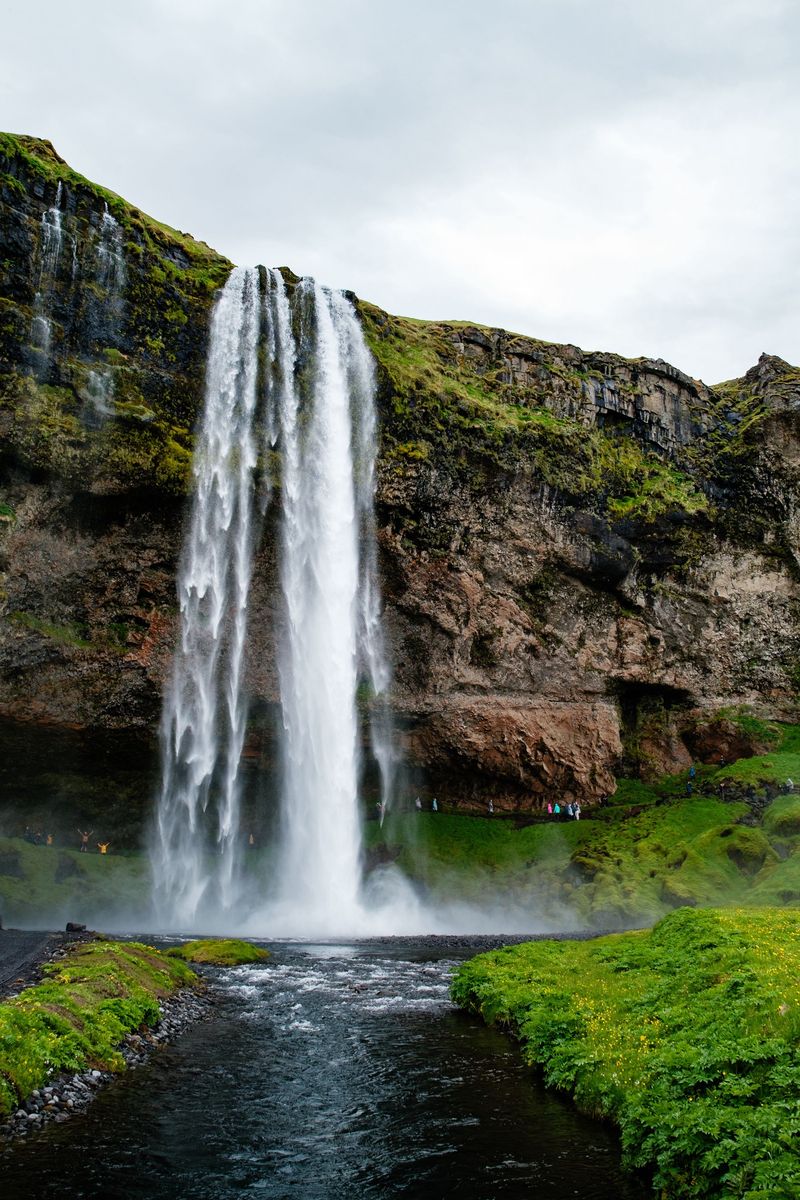
- 2 Seljalandsfoss. A 60-metre waterfall with a path that loops behind the curtain of water. Seljalandsfoss sits right beside Route 1, and the path is slippery with spray, so wear waterproofs.
- 3 Skógafoss. Also 60 metres high and 25 metres wide. A staircase of 527 steps climbs to a viewing platform at the top, where the Fimmvörðuháls trail begins.
- 11 Sólheimajökull. An outlet glacier you can walk up to from a car park off Route 1. Go onto the ice only on a guided Sólheimajökull glacier walk.
- 25 Reynisfjara black sand beach. Basalt columns, a sea cave and the Reynisdrangar sea stacks near Vík. It is also one of the most dangerous places in Iceland because of sneaker waves. Read our black sand beach safety guide before you go, and see the Reynisfjara place page.
- 21 Fjaðrárgljúfur. A mossy canyon up to 100 metres deep and about 2 km long, near Kirkjubæjarklaustur. A path along the eastern rim leads to viewing platforms.
- 4 Svartifoss and Skaftafell. In Skaftafell, part of Vatnajökull National Park, a 1.5 km path climbs about 140 metres to Svartifoss, a waterfall framed by dark basalt columns.
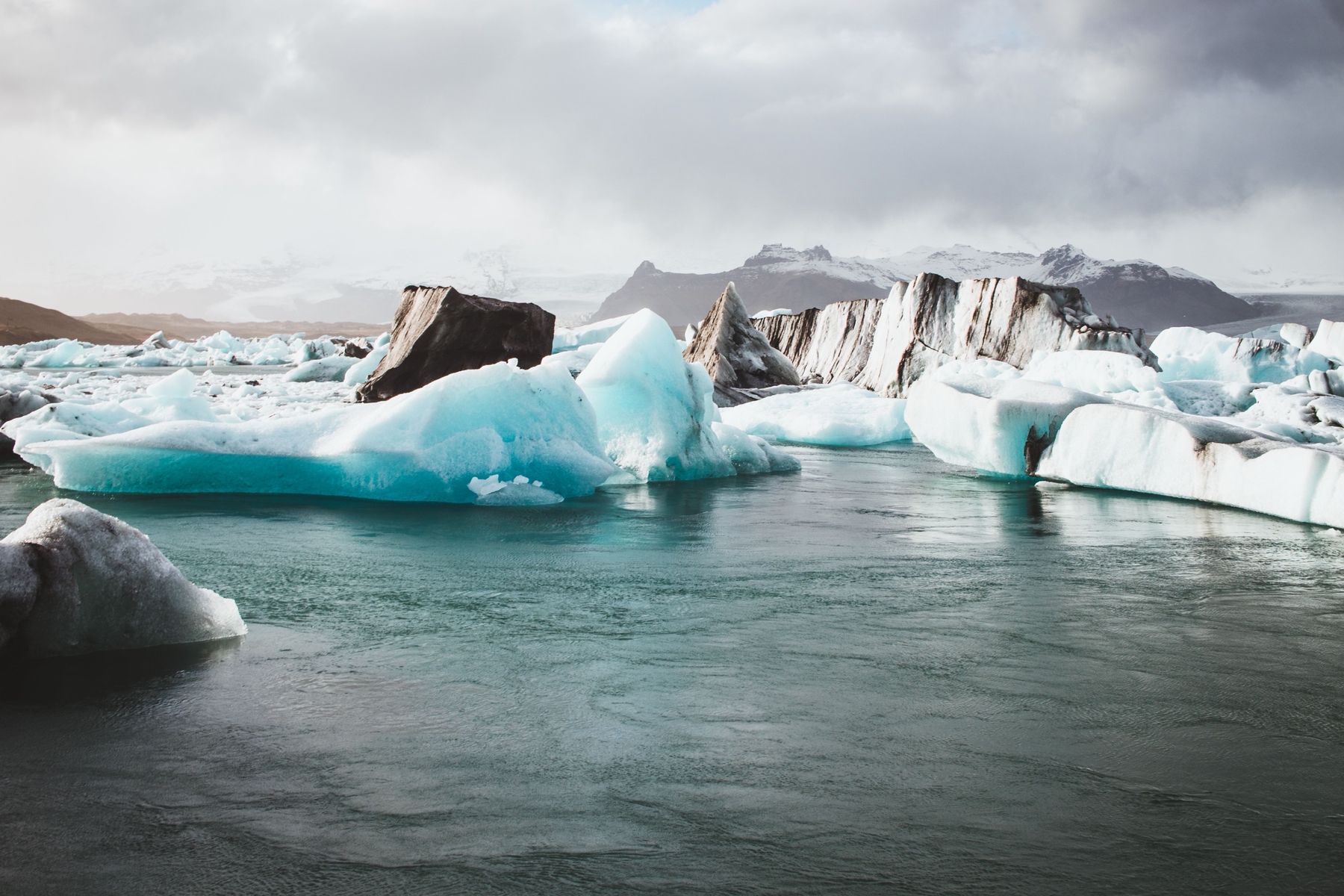
- 10 Jökulsárlón and Diamond Beach. Icebergs from Breiðamerkurjökull float across Jökulsárlón, which began forming in 1934–35 and is up to 284 metres deep. Across the bridge, ice washes up on the black sand of Diamond Beach. Nearby Fjallsárlón is smaller and quieter.
- 26 Vestrahorn. A jagged mountain of about 454 metres above the black dunes of Stokksnes, east of Höfn. The land is private, and you pay a small fee at the Viking Café. See Vestrahorn.
Never swim at Iceland's black beaches and never turn your back on the sea. At Reynisfjara, follow the warning lights at the entrance: on red, the path to the basalt columns and cave is closed.
What is there to do in West Iceland and Snæfellsnes?
West Iceland is close enough to Reykjavík for day trips, and it mixes lava fields, glaciers and coastal villages. Our Snæfellsnes peninsula guide has a full one-day route.
- 8 Hraunfossar. A series of small waterfalls that stream out of the Hallmundarhraun lava field over about 900 metres into the Hvítá river, near Húsafell and Reykholt. Barnafoss is just upstream.
- 12 Langjökull ice tunnel. The Into the Glacier tours take you inside a man-made tunnel in the Langjökull glacier. They run all year, with departures near Húsafell or pick-ups from Reykjavík.
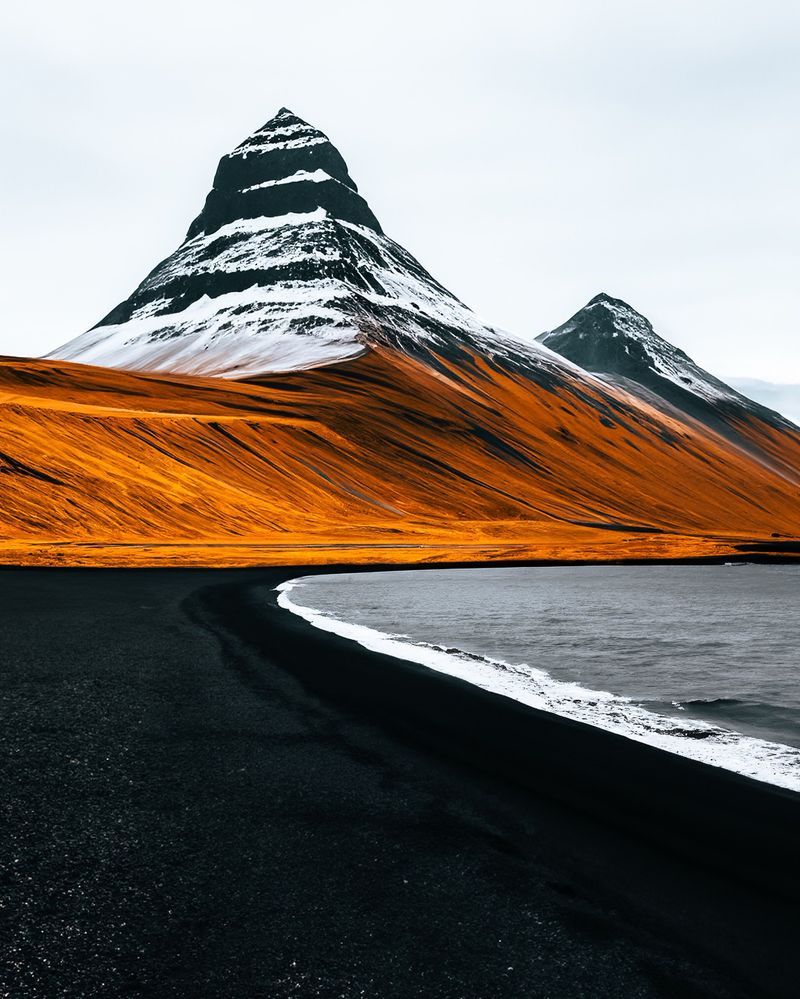
- 9 Kirkjufell and Kirkjufellsfoss. The 463-metre "church mountain" near Grundarfjörður, seen from a small waterfall, is one of the most photographed views in the country. Read about Kirkjufell.
- 13 Snæfellsjökull. The 1,446-metre glacier-capped volcano at the tip of Snæfellsnes is the centre of Snæfellsjökull National Park, with black beaches, lava caves and sea cliffs around it.
What are the highlights of the Westfjords?
The Westfjords are remote, mountainous and best visited from June to September. Two sights on the map are worth the long drive on their own. Our Westfjords road trip covers the routes.
- 7 Dynjandi. A 100-metre waterfall that fans out down a cliff in Arnarfjörður, with five smaller falls below it along the walking path.
- 27 Látrabjarg puffin cliffs. Bird cliffs about 14 km long and up to 441 metres high at Iceland's westernmost point. Puffins are easiest to see from late spring to July. The edge is undercut by burrows and can collapse, so stay well back.
What are the top things to do in North Iceland?
North Iceland has the country's second town, Akureyri, and a loop of big sights called the Diamond Circle. We cover it in detail in our North Iceland guide.
- 28 Hvítserkur. A 15-metre basalt stack off the eastern shore of the Vatnsnes peninsula, shaped like an animal drinking from the sea. Local legend says it is a troll turned to stone by sunrise.
- 6 Goðafoss. A 12-metre, 30-metre-wide horseshoe of falls right on the Ring Road, about 45 minutes east of Akureyri.
- 16 Mývatn and Hverir. A lake ringed by pseudocraters, lava formations at Dimmuborgir, the Hverfjall crater (about 1 km across and 140 metres deep) and the steaming mud pots of Hverir below Námafjall.
- 5 Dettifoss. The Jökulsá á Fjöllum drops 44 metres over a 100-metre-wide edge. Paved Route 862 reaches the west side for most of the year; gravel Route 864 to the east side is usually only passable in summer. Our guide to Dettifoss east or west helps you choose.
- 22 Ásbyrgi. A horseshoe canyon about 3.5 km long with walls up to 100 metres high, inside Vatnajökull National Park. Legend says it is the hoofprint of Odin's eight-legged horse, Sleipnir.
- 29 Húsavík whale watching. Boats sail into Skjálfandi Bay, where humpback and minke whales feed from about March to November.
What is worth seeing in East Iceland?
East Iceland is quieter than the south and has some of the best scenery on the Ring Road. The fjord villages and the East Fjords road are a highlight in themselves.
- 23 Stuðlagil canyon. Walls of basalt columns above a river that runs blue-green in summer. The canyon was largely hidden until the Kárahnjúkar dam, completed in 2009, cut the river's flow. A viewing platform sits on the west bank; the east bank needs a walk of about 5 km. See Stuðlagil.
- Hengifoss. Not on the numbered map, but worth the detour from Egilsstaðir. At 128 metres, Hengifoss is the third-highest waterfall in Iceland, falling past red and black rock layers.
What can you see in the Icelandic highlands?
The interior is only open in summer, on F-roads that need a 4x4 and often cross rivers without bridges. If you do not have the right car or experience, take a highland bus or a guided tour.
- 18 Landmannalaugar. Rhyolite mountains streaked with orange, green and grey, natural hot springs and the start of the Laugavegur trail. The northern F208 from Sigalda has opened between 9 and 26 June in recent years. Our Landmannalaugar hiking guide lists the best walks.
- 24 Askja. A huge caldera in the northern highlands with the Víti explosion crater beside it. Access is by F-roads to Drekagil, followed by Route F894 to a car park, normally only from late June or July. The path down to Víti is very slippery when wet.
How do all 29 top sights compare?
Use this table to see where each numbered sight is and when you can reach it. "All year" means the site is open in winter, not that the road is always clear: check road.is before every drive.
| # | Sight | Region | Type | When |
|---|---|---|---|---|
| 1 | Gullfoss | Golden Circle | Waterfall | All year |
| 2 | Seljalandsfoss | South coast | Waterfall | All year; path behind can close in ice |
| 3 | Skógafoss | South coast | Waterfall | All year |
| 4 | Svartifoss, Skaftafell | South-east | Waterfall, walks | All year |
| 5 | Dettifoss | North | Waterfall | West side most of the year |
| 6 | Goðafoss | North | Waterfall | All year |
| 7 | Dynjandi | Westfjords | Waterfall | Best June–September |
| 8 | Hraunfossar | West | Waterfalls | All year |
| 9 | Kirkjufell | Snæfellsnes | Mountain, waterfall | All year |
| 10 | Jökulsárlón, Diamond Beach | South-east | Glacier lagoon | All year |
| 11 | Sólheimajökull | South coast | Glacier | All year, guided on the ice |
| 12 | Langjökull ice tunnel | West | Glacier tour | All year, tour only |
| 13 | Snæfellsjökull | Snæfellsnes | Volcano, glacier | All year |
| 14 | Blue Lagoon | Reykjanes | Lagoon | All year; may close in eruptions |
| 15 | Geysir, Strokkur | Golden Circle | Geothermal | All year |
| 16 | Mývatn, Hverir | North | Lake, geothermal | All year |
| 17 | Reykjadalur | South-west | Hot river hike | All year; icy in winter |
| 18 | Landmannalaugar | Highlands | Mountains, hot spring | Summer only |
| 19 | Þingvellir | Golden Circle | National park | All year |
| 20 | Kerið | Golden Circle | Crater | All year |
| 21 | Fjaðrárgljúfur | South coast | Canyon | Can close in thaw |
| 22 | Ásbyrgi | North | Canyon | Best May–October |
| 23 | Stuðlagil | East | Canyon | Blue water in summer |
| 24 | Askja | Highlands | Caldera | Summer only |
| 25 | Reynisfjara | South coast | Black beach | All year; follow warning lights |
| 26 | Vestrahorn | South-east | Mountain, dunes | All year |
| 27 | Látrabjarg | Westfjords | Bird cliffs | Puffins late spring to July |
| 28 | Hvítserkur | North-west | Sea stack | All year |
| 29 | Húsavík | North | Whale watching | About March–November |
Which Iceland experiences should you book ahead?
Book anything with a guide or limited places, especially from June to August and over Christmas and New Year. These are the ones that sell out first:
- Ice caves. The natural ice caves in Vatnajökull's glaciers are a winter trip, usually about November to March, and only with a licensed guide. See our ice cave guide.
- Glacier hikes. Guided glacier hikes run all year at Skaftafell and Sólheimajökull. Crampons and an ice axe are provided.
- Boat tours at Jökulsárlón. Zodiac and amphibious boats run in the warmer months and fill up in summer.
- Whale watching. Tours from Húsavík and Akureyri run from spring to autumn; Reykjavík's Old Harbour also has departures.
- Lagoon tickets. Book the most popular lagoons ahead in summer. Compare them in our hot springs guide.
The northern lights need no booking at all, just a dark, clear night between about September and April. Our northern lights guide explains forecasts and where to stand.
How many days do you need to see Iceland's top sights?
To see most of the 29 sights on the map, plan at least 10 days with a car. A full loop of the Ring Road is about 1,320 km before detours, and the Westfjords and highlands add long days on slow roads. Our Ring Road guide breaks the loop into daily legs.
- 3–4 days: Reykjavík, the Golden Circle and the south coast as far as Vík.
- 5–6 days: add Skaftafell and Jökulsárlón, staying near the glaciers rather than driving back.
- 7–10 days: the full Ring Road with the north and east, plus Snæfellsnes if you have time.
- Two weeks or more: add the Westfjords and, in summer, the highlands.
In winter, cut the distances. Daylight is short and storms can close roads, so pick one region, such as the south coast or the north around Akureyri, and see it well. Not sure which? Our guide to Iceland's regions compares them, and the best time to visit Iceland explains the seasons.
What should you know before visiting Iceland's top sights?
- Check three things every morning: the weather at vedur.is, the roads at road.is and alerts at safetravel.is.
- Stay on marked paths. Moss takes decades to recover, geothermal ground can be thin over boiling water, and cliff edges are often undercut.
- Do not go onto glaciers without a guide. Crevasses are often hidden under snow.
- Expect parking fees. Many popular sites charge for parking, often through an app, and some private sites charge entry.
- Start early. Tour buses reach the Golden Circle and south coast from mid-morning. Arrive before 9 am, or late in the long summer evenings, for quieter visits.
For bases along the way, see where to stay in Iceland, and for cars, buses and flights read getting around Iceland. If you like to plan on paper, our Complete Guide to Iceland has every highlight on this map with routes and maps for the road.
Facts checked October 2026. Volcanic activity on the Reykjanes peninsula can close the Blue Lagoon and nearby roads at short notice; check vedur.is and safetravel.is. Highland road opening dates, entry and parking fees change every year.