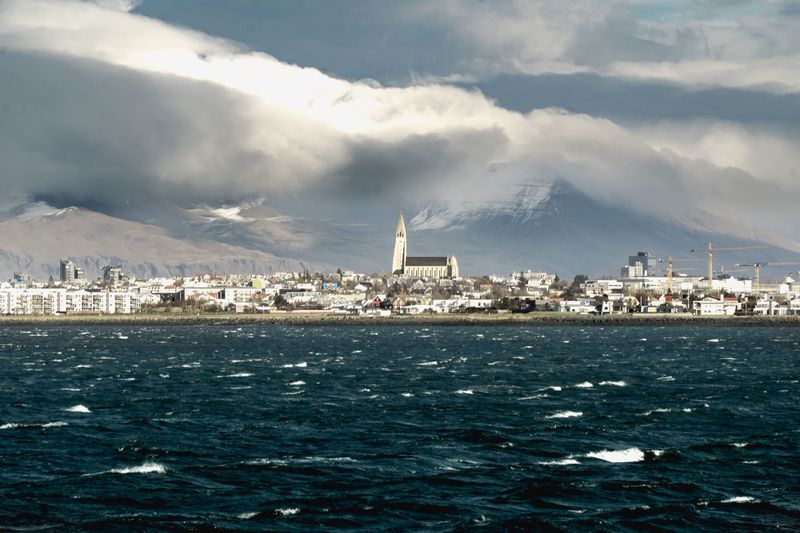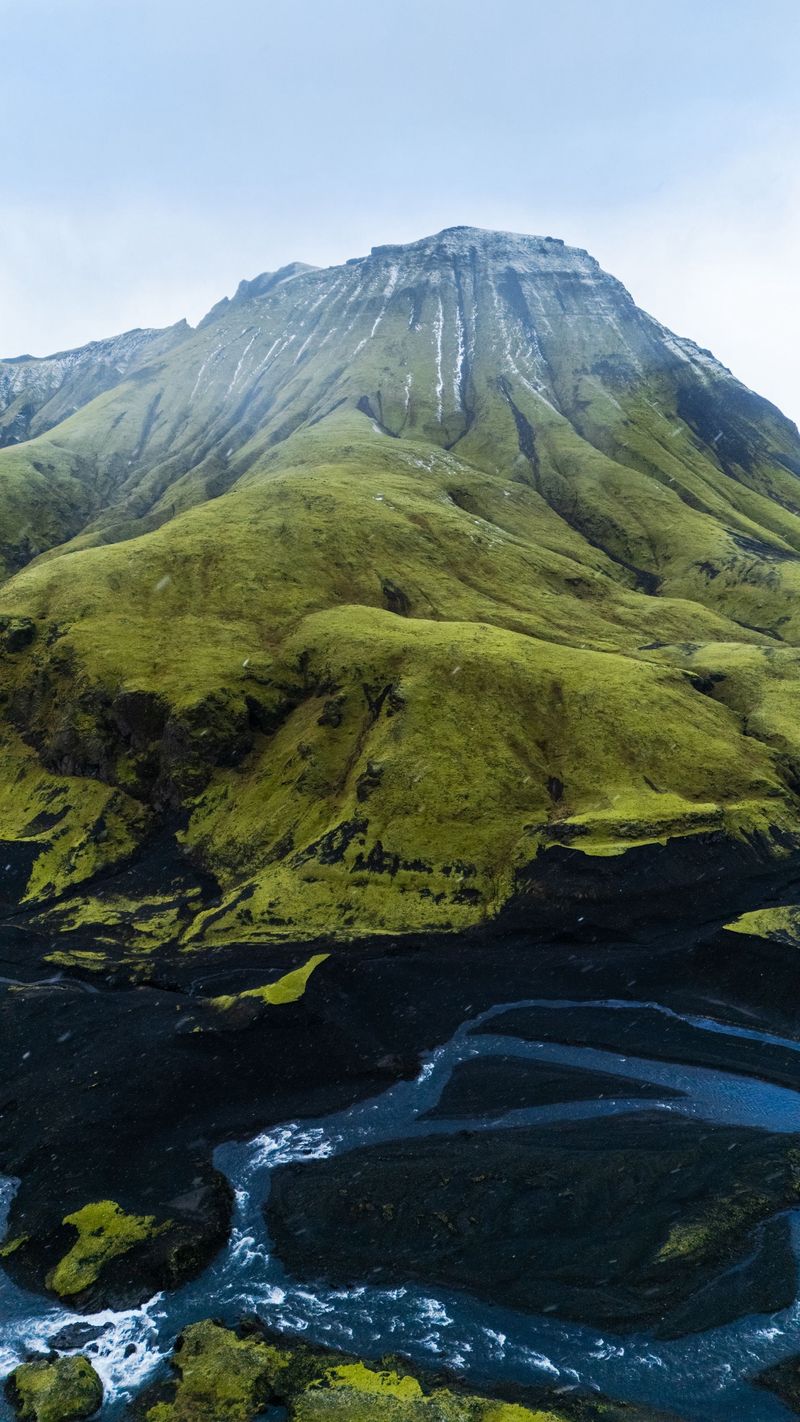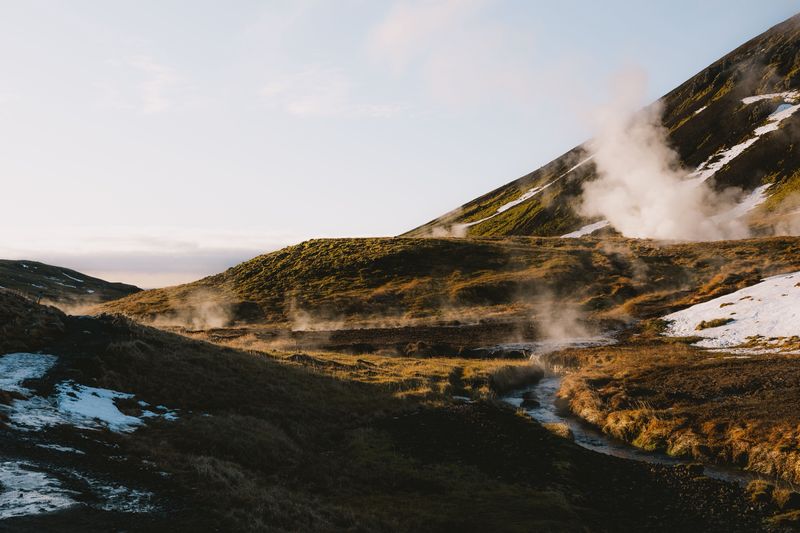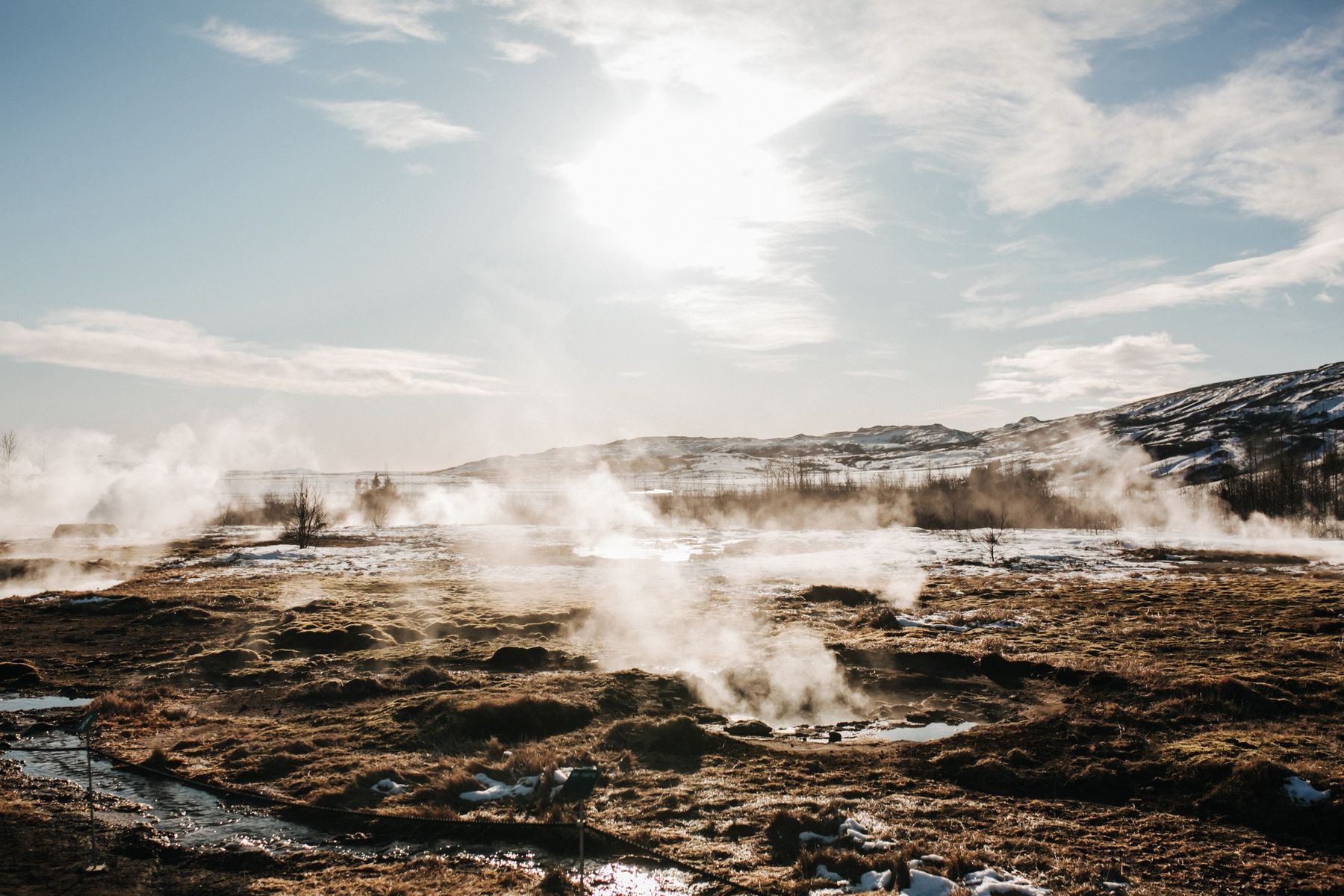
Iceland has hot water almost everywhere, and you can bathe in it in three ways: big designed lagoons with bars and saunas, cheap local swimming pools, and natural springs in the countryside. This guide covers 19 of the best, numbered on our map, from the Blue Lagoon near the airport to a remote seaside pool at the end of a gravel road in the Westfjords. For each one you get where it is, what it is like and roughly what it costs in 2026.
What are the best hot springs in Iceland?
The best hot spring depends on how you travel. For a first trip with little time, book Sky Lagoon or the Blue Lagoon near Reykjavík. On the Golden Circle, the Secret Lagoon and Laugarvatn Fontana are easy stops, and the free Reykjadalur hot river is the best natural bath within an hour of the city. On a Ring Road trip, the rebuilt Earth Lagoon at Mývatn, the Forest Lagoon by Akureyri and Vök Baths in the east are all worth a stop.
- Most famous: the Blue Lagoon, milky blue water in a lava field on the Reykjanes peninsula.
- Best view near the city: Sky Lagoon, with its infinity edge facing the ocean.
- Best wild bath: Reykjadalur, a warm river at the end of a 3 km hike.
- Most atmospheric: Seljavallalaug, a 1923 pool tucked into a mountain valley.
- Best in the north: Earth Lagoon Mývatn, formerly the Mývatn Nature Baths.
- Best for meeting locals: any town swimming pool, for about ISK 1,500 in Reykjavík.
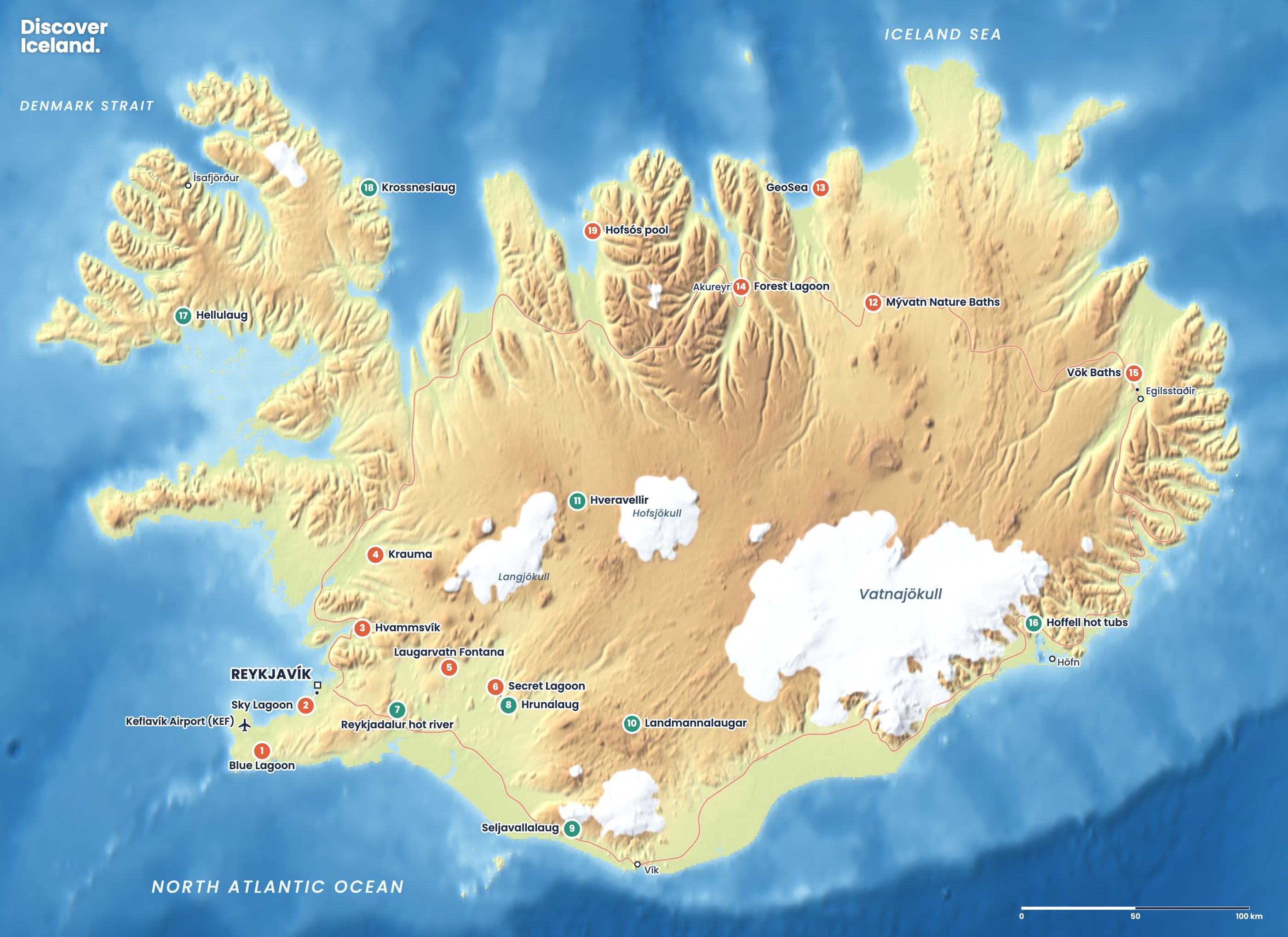
What is the difference between a lagoon, a pool and a natural hot spring?
A lagoon is a commercial spa built around geothermal water, with changing rooms, a bar and timed tickets. A pool is a public swimming pool run by the town, with lanes, hot tubs and very low prices. A natural hot spring is a pool or river in the landscape, often with no facilities at all.
The lagoons cost the most, from about ISK 7,500 to more than ISK 18,000 in 2026, and most ask you to book a time slot. The town pools are where Icelanders actually bathe: there are more than 120 across the country, and in December 2025 Iceland's swimming pool culture was added to UNESCO's list of intangible cultural heritage. Natural springs are often free, but more of them now charge a small fee to pay for toilets, parking and upkeep.
In all three, the same basic rule applies: wash thoroughly before you get in. Our guide to Iceland swimming pool rules explains the shower routine.
Which hot springs are near Reykjavík?
Four of the pools on the map are within about 90 minutes of the capital. Two of them, the Blue Lagoon and Sky Lagoon, are the most booked baths in the country.
1. Blue Lagoon
The Blue Lagoon sits in a lava field about 20 km from Keflavík Airport and roughly 45–50 minutes from Reykjavík. Its water comes from the Svartsengi geothermal power plant next door and averages 37–39°C. In 2026 the Comfort ticket starts from about ISK 11,990, with a silica mud mask, a towel and a drink included. Prices change with demand.
The lagoon is close to the Sundhnúkur crater row, which has erupted nine times since December 2023. It has closed or been evacuated several times during that series. Read our Reykjanes volcano guide and check the lagoon's own site before you go.
2. Sky Lagoon
Sky Lagoon opened in 2021 at Kársnes harbour in Kópavogur, about 15 minutes' drive from central Reykjavík. Its long infinity edge looks straight over the sea, and the ticket includes a seven-step sauna and cold-plunge ritual. Entry starts from about ISK 13,000–14,000 in 2026, and you must be at least 12 years old. We compare the two in Blue Lagoon vs Sky Lagoon.
3. Hvammsvík
Hvammsvík is a set of eight natural-style pools on the shore of Hvalfjörður, about 45 minutes north of Reykjavík. It opened in 2022. Some pools mix with seawater, so their level and temperature change with the tide, and there is a cold ocean plunge too. Entry starts from about ISK 7,900.
4. Krauma
Krauma is a small spa beside Deildartunguhver in Borgarfjörður, roughly 1.5 hours from Reykjavík. Deildartunguhver is Europe's highest-flow hot spring, producing about 180 litres per second, and you can see it free from a boardwalk. The spa opened in 2017 and has five warm pools at 37–42°C, a cold tub, saunas and a restaurant. Adult entry was about ISK 7,900 in early 2026.
Which hot springs are on the Golden Circle?
The Golden Circle has four good bathing stops within easy reach of Þingvellir, Geysir and Gullfoss. See our Golden Circle guide for the full route.
5. Laugarvatn Fontana
Fontana sits on the shore of Lake Laugarvatn, between Þingvellir and Geysir. It has steam rooms built over natural vents, warm mineral baths and a sauna, and you can walk into the cold lake between soaks. The spa closed in October 2025 for a full renovation and reopened on 1 August 2026. Its geothermal bakery, where rye bread bakes overnight in hot sand, runs as a separate tour.
6. Secret Lagoon
The Secret Lagoon at Flúðir, known locally as Gamla laugin (the old pool), was built in 1891. It is the oldest swimming pool in Iceland. The water stays at about 38–40°C all year, a small geyser bubbles beside it, and a wooden walkway circles the hot spring area. It has changing rooms and a café, and booking ahead is wise.
7. Reykjadalur hot river
Reykjadalur, the steam valley, is a warm river above the town of Hveragerði, about 45 minutes from Reykjavík. You hike about 3 km each way to reach the bathing area, where boardwalks and simple screens line the bank. Bathing is free, and the car park charges an hourly fee. Our Reykjadalur hot river guide covers the trail, and the Reykjadalur place page has the essentials.
8. Hrunalaug
Hrunalaug is a set of small stone-edged pools on a family farm near Flúðir, about five minutes' walk from the parking area. There are three pools, from about 32°C to 40°C, two small changing huts and no showers. In 2026 adults pay about ISK 3,000 and children under 10 go free. Visits are limited to 90 minutes, and soap and glass are not allowed.
Which hot springs are on the South Coast and in the highlands?
The south has one of Iceland's most photographed pools, and the highlands have two classic summer soaks at the end of rough roads.
9. Seljavallalaug
Seljavallalaug was built by local volunteers in 1923 and is 25 m long and 10 m wide. It sits in a narrow valley below Eyjafjallajökull, a 15–20 minute walk from the car park, east of Seljalandsfoss. Entry is free, with a donation box for cleaning. The water is only lukewarm, typically 20–35°C, and there is just a basic changing shed.
10. Landmannalaugar
Landmannalaugar means "the people's pools", and the hot stream beneath the Laugahraun lava field is a famous end to a day's hiking. It is reached only in summer by highland F-road, ideally in a 4x4. In recent summers private cars have needed a pre-booked parking slot and a service fee for daytime arrivals from 20 June to mid-September. See our Landmannalaugar hiking guide.
11. Hveravellir
Hveravellir is a geothermal area on the Kjölur highland route, road 35, between the south and the north. Its bathing pool sits at about 38–40°C next to a summer mountain lodge, campsite and café. The road is generally open from about mid-June to mid-September, and a small service fee covers the pool, showers and toilets.
Which hot springs are in North Iceland?
North Iceland has four of the pools on the map, and they make easy stops on a Ring Road trip through Akureyri and Mývatn.
12. Earth Lagoon Mývatn (Mývatn Nature Baths)
The Mývatn Nature Baths opened in 2004 and have been rebuilt and renamed Earth Lagoon Mývatn. The new lagoon reopened in July 2026, about 35% larger, with a swim-in steam cave, a waterfall and two hot tubs. The water is cooled to 36–40°C and entry starts from about ISK 7,900. Read our full Mývatn Nature Baths guide.
13. GeoSea
GeoSea opened in 2018 on the headland above Húsavík harbour. Its infinity pools are filled with geothermally heated seawater from boreholes, at about 38–39°C, and look out over Skjálfandi Bay. It pairs well with a whale-watching trip from the town.
14. Forest Lagoon
The Forest Lagoon (Skógarböðin) opened in 2022 in the Vaðlaskógur woods, just across the fjord from Akureyri. The hot water was struck while the Vaðlaheiði road tunnel was being dug. Pools are held at about 37°C, with a cold plunge, a sauna and a swim-up bar. Basic entry was about ISK 7,500 in 2026.
19. Hofsós pool
Hofsós swimming pool opened in 2010 on the hillside above the village of Hofsós in Skagafjörður. It was designed by Basalt Architects and seems to run straight into the fjord, with Drangey island beyond. It is a public pool, so it is cheap and the locals use it.
Which hot springs are in East Iceland?
The east has one designed spa and one simple set of hot tubs, both handy on a Ring Road day.
15. Vök Baths
Vök Baths opened in 2019 on Lake Urriðavatn, about five minutes' drive from Egilsstaðir. Its two floating pools sit level with the lake, so you look straight across the water. Adult entry is about ISK 7,690. It is a good stop on the same day as Hengifoss or Stuðlagil.
16. Hoffell hot tubs
The Hoffell hot tubs are a handful of geothermal tubs at Hoffell farm, about 10–15 km from Höfn, near an outlet glacier of Vatnajökull. There are changing rooms with showers, a sauna and toilets. Entry was about ISK 3,500 when we checked, with children under 8 free. Temperatures vary from warm to very hot, so test each tub first.
Which hot springs are in the Westfjords?
The Westfjords have two of the most memorable soaks in the country, both on long, quiet drives. Plan them as part of a Westfjords road trip.
17. Hellulaug
Hellulaug is a small natural pool right beside the sea at Vatnsfjörður, about 1.5 km from the Flókalundur hotel on road 60. It is about 3–4 m across, around 60 cm deep and roughly 38°C. Entry is free, with a donation canister for upkeep. There are no changing rooms or toilets.
18. Krossneslaug
Krossneslaug is a small outdoor pool on the shore at the end of road 643 on the Strandir coast, the far edge of the Westfjords. The water is about 38–40°C, and there are simple changing rooms and showers. It is seasonal, roughly mid-May to the end of August, and charges a small fee.
How much do Iceland's hot springs cost?
Prices range from free to about ISK 18,500 for a premium lagoon package. These are adult prices from operators and travel guides checked in 2026; most lagoons use dynamic pricing, so expect changes.
| # | Pool | Region | Type | Adult price (2026) |
|---|---|---|---|---|
| 1 | Blue Lagoon | Reykjanes | Lagoon | From about ISK 11,990 |
| 2 | Sky Lagoon | Capital area | Lagoon | From about ISK 13,000 |
| 3 | Hvammsvík | Hvalfjörður | Lagoon | From about ISK 7,900 |
| 4 | Krauma | Borgarfjörður | Spa | About ISK 7,900 |
| 5 | Laugarvatn Fontana | Golden Circle | Spa | Paid, check site |
| 6 | Secret Lagoon | Flúðir | Old pool | Paid, book ahead |
| 7 | Reykjadalur | Hveragerði | Hot river | Free; paid parking |
| 8 | Hrunalaug | Flúðir | Natural pools | About ISK 3,000 |
| 9 | Seljavallalaug | South Coast | Old pool | Free; donation box |
| 10 | Landmannalaugar | Highlands | Hot stream | Car service fee in summer |
| 11 | Hveravellir | Highlands | Natural pool | Small service fee |
| 12 | Earth Lagoon Mývatn | North | Lagoon | From about ISK 7,900 |
| 13 | GeoSea | Húsavík | Sea baths | Paid, book ahead |
| 14 | Forest Lagoon | Akureyri | Lagoon | From about ISK 7,500 |
| 15 | Vök Baths | Egilsstaðir | Lake baths | About ISK 7,690 |
| 16 | Hoffell | Near Höfn | Hot tubs | About ISK 3,500 |
| 17 | Hellulaug | Westfjords | Natural pool | Free; donations |
| 18 | Krossneslaug | Westfjords | Pool | Small fee, summer only |
| 19 | Hofsós pool | Skagafjörður | Town pool | Local pool price |
For the full list of pools you can use for free or nearly free, see free hot springs in Iceland.
Can you visit hot springs in Iceland in winter?
Yes, and many people think winter is the best time. The lagoons, town pools and most spas open all year, and sitting in 38°C water with snow around you is a highlight of a winter trip. On a clear night at a dark spring you may even see the northern lights from the water.
Natural springs are harder in winter. Reykjadalur's trail freezes, often from around mid-November, so you need microspikes and a headlamp. Highland springs such as Landmannalaugar and Hveravellir are cut off when the mountain roads close, and Krossneslaug is a summer pool. In the dark months, plan wild bathing around the few hours of daylight.
How do you stay safe at Iceland's hot springs?
Geothermal water can be close to boiling at the source, so only bathe where bathing is allowed and the water has been tested. Stay on marked paths in hot spring areas, because the ground can be a thin crust over scalding mud. People have been badly hurt, and some killed, stepping off the trail in geothermal areas.
- Test before you get in. Put a hand in first, especially at natural pools where the inflow is hot.
- Do not bathe where it is banned. Grjótagjá, the cave at Mývatn, is too hot and unpredictable for bathing, and its owners ask visitors to stay out.
- Keep soaks short. Limit time in the hottest water, drink water and get out if you feel dizzy.
- Check the weather and roads. Use vedur.is, road.is and safetravel.is, and for the Blue Lagoon check the volcanic situation too.
- Watch children closely. Natural pools have no lifeguards.
Leave no trace: at natural springs, take every bit of rubbish home, never use soap or shampoo in the water, and use the toilets at the car park. Several springs on private land have closed in the past because visitors left a mess.
What should you bring to a hot spring in Iceland?
Bring a swimsuit, a quick-dry towel and a plastic bag for wet things. Lagoons rent towels and swimwear, but at natural springs you carry everything. Add a warm hat for winter soaks, sandals or water shoes for rocky pools, and a few coins or a card for honesty boxes and parking. Keep your phone in a dry bag, and never take photos in changing rooms.
For more ideas on where to bathe as you travel, browse our Iceland highlights map. If you like having it all on paper, our printed Complete Guide covers the hot springs region by region.
Facts checked October 2026. Lagoon prices are dynamic and change by season and time slot. The Blue Lagoon can close at short notice during volcanic unrest on the Reykjanes peninsula; check vedur.is, safetravel.is and the operator's site before you go.
Sources
- Iceland's geothermal lagoons compared (Iceland Highlights, July 2026)
- Blue Lagoon admissions rate card 2026 (Blue Lagoon)
- Icelandic swimming pool culture inscribed on UNESCO's list (Reykjavík City)
- Fontana: reopened after renovation (Laugarvatn Fontana)
- Earth Lagoon Mývatn: new facilities (Earth Lagoon)
- Krauma, Hrunalaug, Hoffell, Hellulaug and Krossneslaug listings (Hot Springs Guides)
- Landmannalaugar FAQ: reservations and service fee (Environment Agency of Iceland)
- Grjótagjá travel guide (Guide to Iceland)