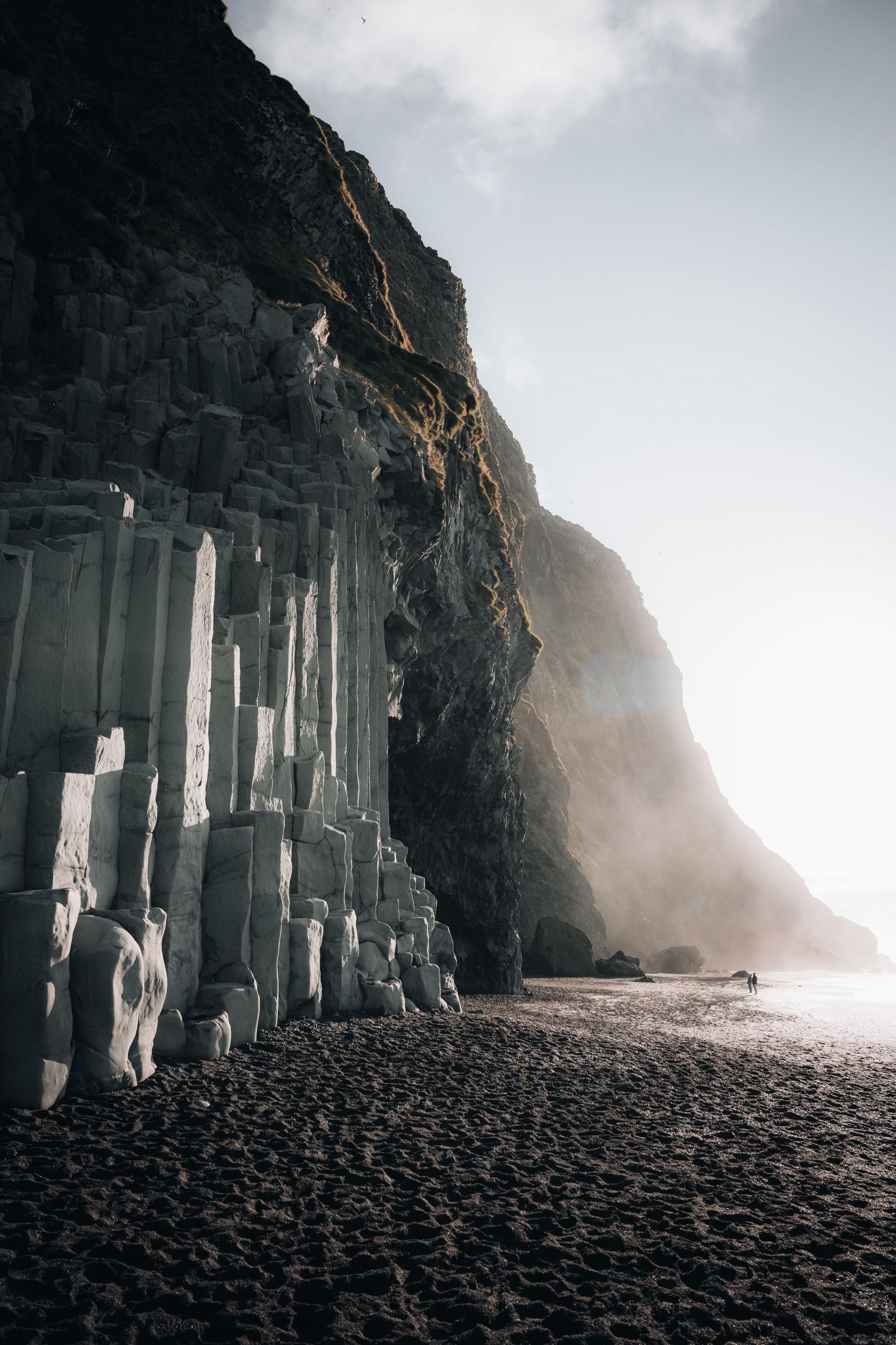
Iceland's black sand beaches are made of crushed volcanic rock, and the best known is Reynisfjara near Vík, with its basalt columns and sea stacks. It is also the most dangerous: sneaker waves have killed six people there since 2007. This guide covers the best black beaches around the country, why the sand is black, and exactly how to stay safe, including how the Reynisfjara warning lights work.
Why are Iceland's beaches black?
Iceland's beaches are black because most of the island is made of basalt, a dark volcanic rock rich in iron and magnesium. Waves, rivers, glaciers and weather grind the rock down into black sand and pebbles. Along the south coast, glacial rivers and floods from volcanoes under the ice caps have spread huge plains of black sand, called sandur, between the mountains and the sea.
Which black sand beaches in Iceland are worth visiting?
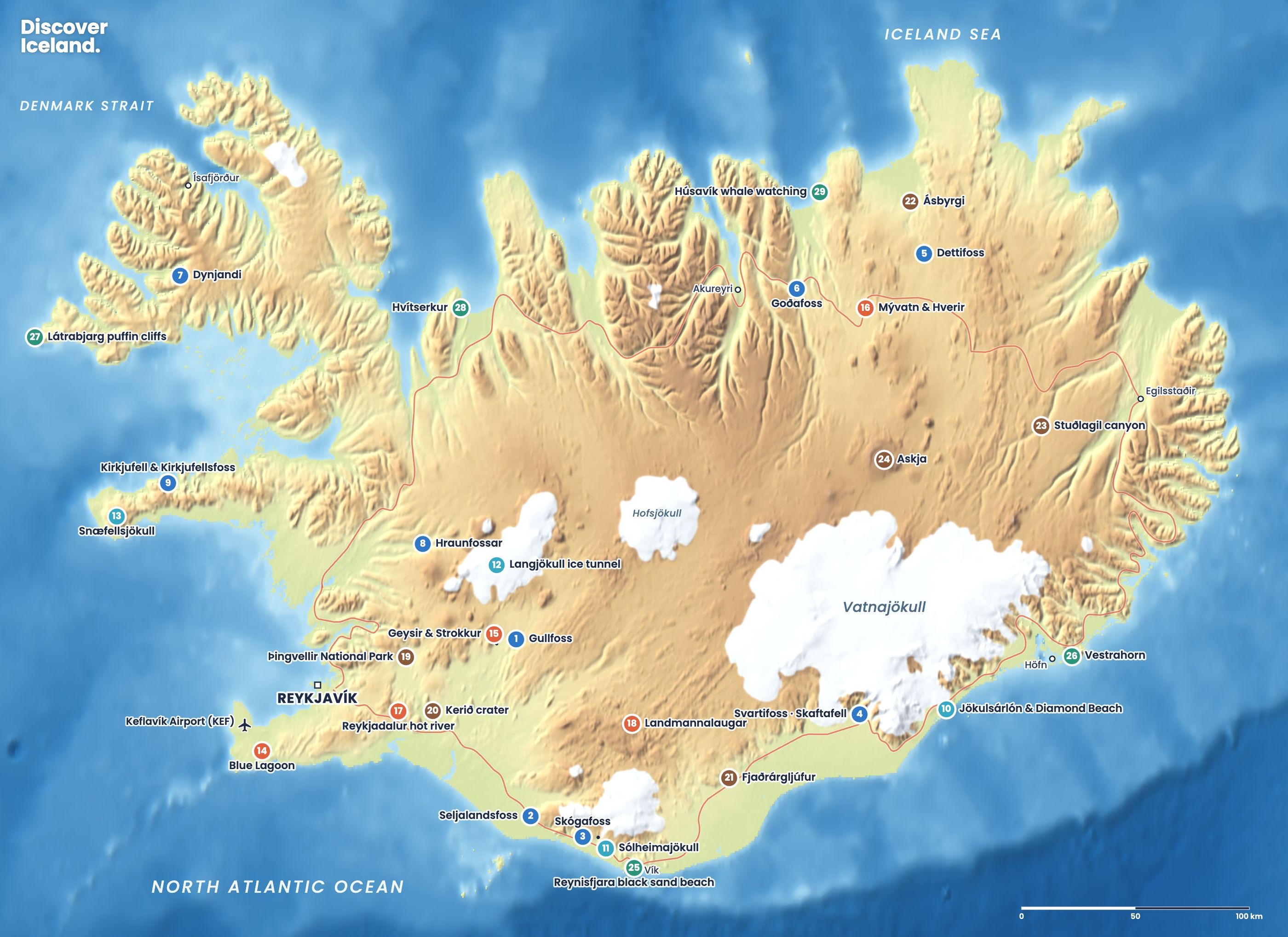
These are the best-known black beaches, from the south coast round to Snæfellsnes. Most are on or near Route 1.
| Beach | Where | Known for | Main hazard |
|---|---|---|---|
| Reynisfjara | Near Vík, south coast | Basalt columns, cave, sea stacks | Sneaker waves, rockfall |
| Vík beach | In front of Vík | Sea stack views, easy access | Waves |
| Dyrhólaey | West of Vík | Arch and views over the black coast | Cliff edges, wind |
| Sólheimasandur | Between Skógar and Vík | Flat black plain, DC-3 plane wreck | Weather, long walk |
| Diamond Beach | By Jökulsárlón | Ice on black sand | Rolling ice, waves |
| Stokksnes | East of Höfn | Dunes below Vestrahorn | Waves, private land fee |
| Djúpalónssandur | Snæfellsnes | Black pebbles, lifting stones, shipwreck | Waves, currents |
What makes Reynisfjara dangerous?
Sneaker waves. These are sudden waves that run much further up the beach than the ones before them, often with no warning, even when the sea looks calm. The beach shelves steeply into the open Atlantic, and the backwash is strong enough to pull an adult off their feet and out to sea. The water is cold, and there is no lifeguard.
Six people have died at Reynisfjara since 2007, four of them by drowning. The last three fatal accidents, in 2021, 2022 and August 2025, all happened near the basalt columns at the eastern end of the beach, where people stand for photos and the waves reach the cliff. The 2025 victim was a nine-year-old girl, swept out while the yellow light was on.
How does the Reynisfjara warning light system work?
At the entrance to the beach, warning signs carry three lights linked to the Icelandic Road and Coastal Administration's wave forecast.
- Green: little danger. Stay alert and keep well back from the water anyway.
- Yellow: moderate danger. Parts of the beach are restricted. Stay high up the beach and away from the columns and the cave.
- Red: high danger. A gate on the path down to the beach ridge is closed, and you cannot go to the basalt columns or into Hálsanefshellir cave. You can still use the viewing platform by the signs.
After the death in August 2025, landowners, the Icelandic Tourist Board, the South Iceland police, SafeTravel and the local rescue team agreed to change the risk model so the red light switches on sooner, and therefore more often. The closure gate was added that month.
At Reynisfjara, stay at least 30 metres from the water's edge, never turn your back on the sea, and never stand at the foot of the basalt columns or in the cave when waves are reaching them. If the light is red, stay on the platform.
What happened to Reynisfjara in 2026?
In winter 2025–26, weeks of unusual easterly winds and big waves stripped sand from Reynisfjara. In early February 2026 part of the slope beneath Reynisfjall collapsed onto the beach, reaching the warning signs. A coastal engineer at the Icelandic Road and Coastal Administration said he had never seen changes of this size there. The beach dropped in places, the slope down to the shore became steeper and boulders were exposed.
The beach did not disappear, and by March 2026 sand was returning as the winds changed. The shoreline is still changing, though, and fifty years ago it lay about 500 metres further out. Expect the layout, paths and access to differ from older photos, and check safetravel.is before you go. See our Reynisfjara place page for more on the beach.
How do you visit Diamond Beach safely?
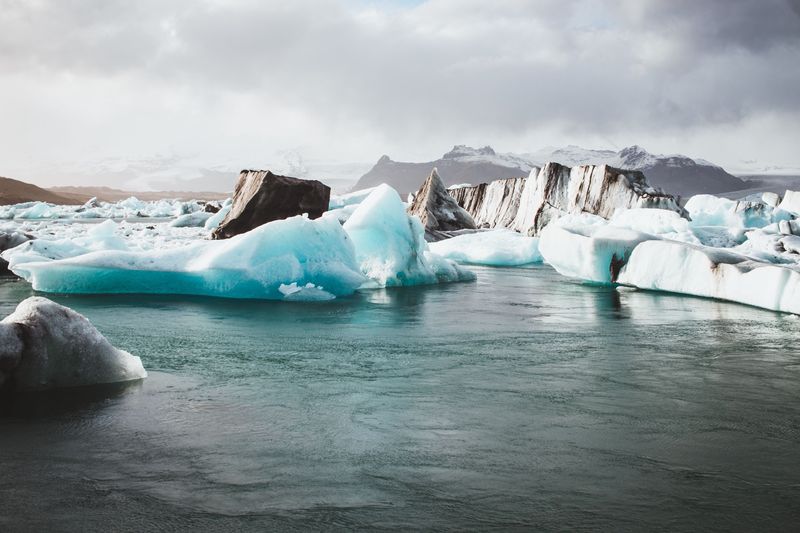
Diamond Beach is the black sand beach across the Ring Road bridge from Jökulsárlón, where icebergs from the lagoon wash up and sparkle on the sand. Its official name is Eystri-Fellsfjara. The same ocean rules apply as at Reynisfjara: waves surge up the steep beach, and ice blocks the size of cars can be pushed or rolled by them. Do not climb on the ice or stand between ice and the sea. Read our Jökulsárlón and Diamond Beach guide and the Jökulsárlón place page.
What other black beaches are worth the detour?
Stokksnes, about 15 km east of Höfn, has grass-topped black dunes below the jagged peaks of Vestrahorn. Shallow water on the sand often mirrors the mountain. The land is private, and a small fee is paid at the Viking Café. See Stokksnes.
Sólheimasandur is a vast, flat black plain where a US Navy DC-3 came down in 1973. Cars are banned, so you walk about 3.5–4 km each way. It is safe from waves but exposed to wind and rain.
Dyrhólaey, west of Vík, gives the best overview of the black coast from a headland about 120 metres high. The small beach of Kirkjufjara below it is closed because of erosion, rockfall and waves.
Djúpalónssandur on the Snæfellsnes peninsula is covered in smooth black pebbles. Four lifting stones by the path range from 23 kg to 154 kg, and pieces of a 1948 trawler wreck lie on the shore. Swimming is prohibited.
For a change of colour, Rauðisandur in the Westfjords is about 10 km of red and golden sand, and Ytri Tunga on Snæfellsnes has pale sand and resting seals.
What are the safety rules for every Icelandic beach?
- Never swim. The water is cold, the currents are strong and there are no lifeguards.
- Keep well back from the water and watch the sea, not your phone or camera.
- Follow signs, lights and closures. They are based on wave forecasts and local knowledge.
- Keep children close and hold their hands near the water.
- Stay away from cliffs and caves in rough seas; rockfall and erosion are common.
- Check safetravel.is and vedur.is before you go. Storms bring the biggest waves.
The black beaches are a highlight of any trip along the south coast of Iceland, and they make the list in our guide to things to do in Iceland. Treat the sea with respect and they are a wonderful sight.
Facts checked October 2026. Reynisfjara changes with the seasons, and access rules can change after storms or accidents. Check the warning lights on site and safetravel.is before every visit.
Sources
- The light was yellow: last three accidents in the same spot (Iceland Monitor)
- Red light warning in Reynisfjara to turn on sooner (Reykjavík Grapevine)
- Closure gate likely to be installed today (Iceland Monitor)
- Part of Reynisfjara beach collapses after severe erosion (Reykjavík Grapevine)
- Reynisfjara beach erosion update (Icelandia)
- Beaches in Iceland (Perlan)
- Jökulsárlón (Wikipedia)
- Djúpalónssandur (Wikipedia)