The best waterfalls in Iceland sit along the Ring Road and the Golden Circle, so you can see the famous ones without a 4x4. On the South Coast, Seljalandsfoss and Skógafoss are about 30 km apart. Gullfoss is the end point of the Golden Circle. In the north, Dettifoss is the most powerful waterfall in Europe and Goðafoss is a short stop near Akureyri. This guide covers the main falls region by region, with heights, walking times, fees and seasons, plus a map.
Which are the best waterfalls in Iceland?
If you only have time for a handful, these are the waterfalls in Iceland most worth planning around. Each one is different, which is the point: you get curtains, canyons, columns and sheer power.
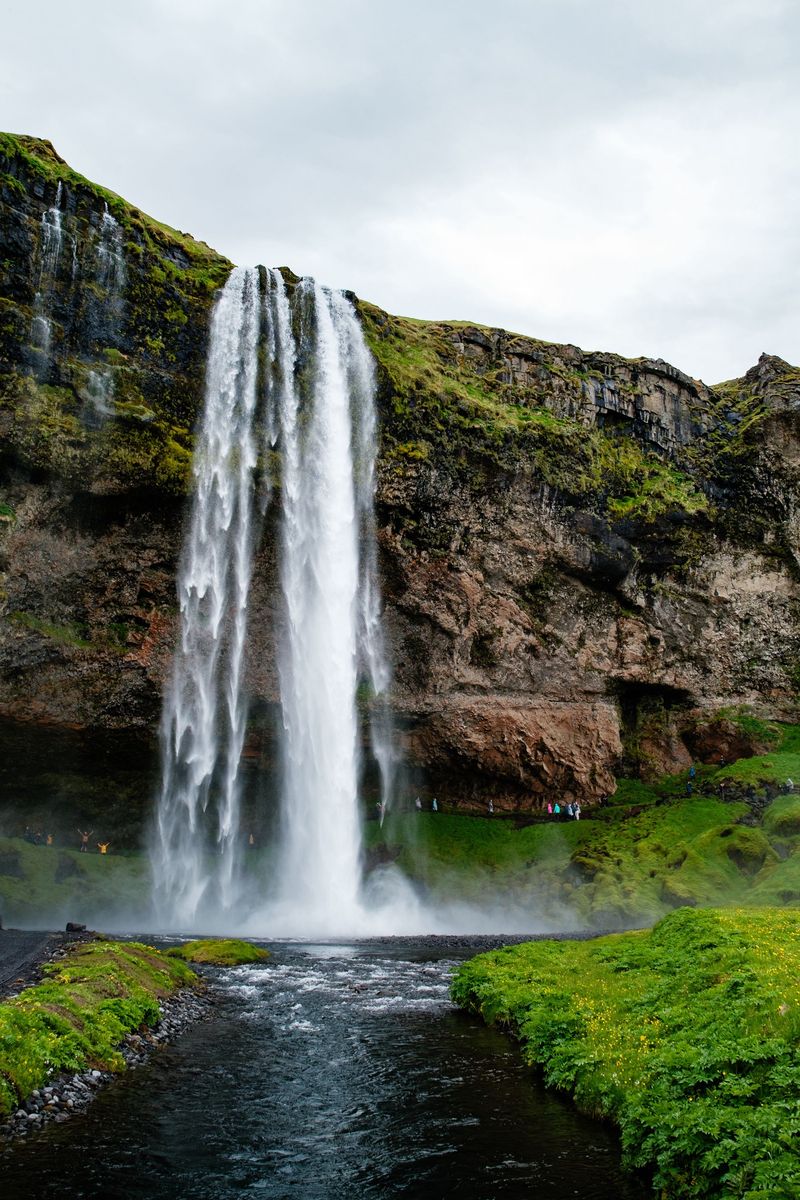
- Seljalandsfoss (South Coast): a 60 m fall with a path that runs behind it in the warmer months.
- Skógafoss (South Coast): about 60 m high and 25 m wide, with a 527-step staircase to the top.
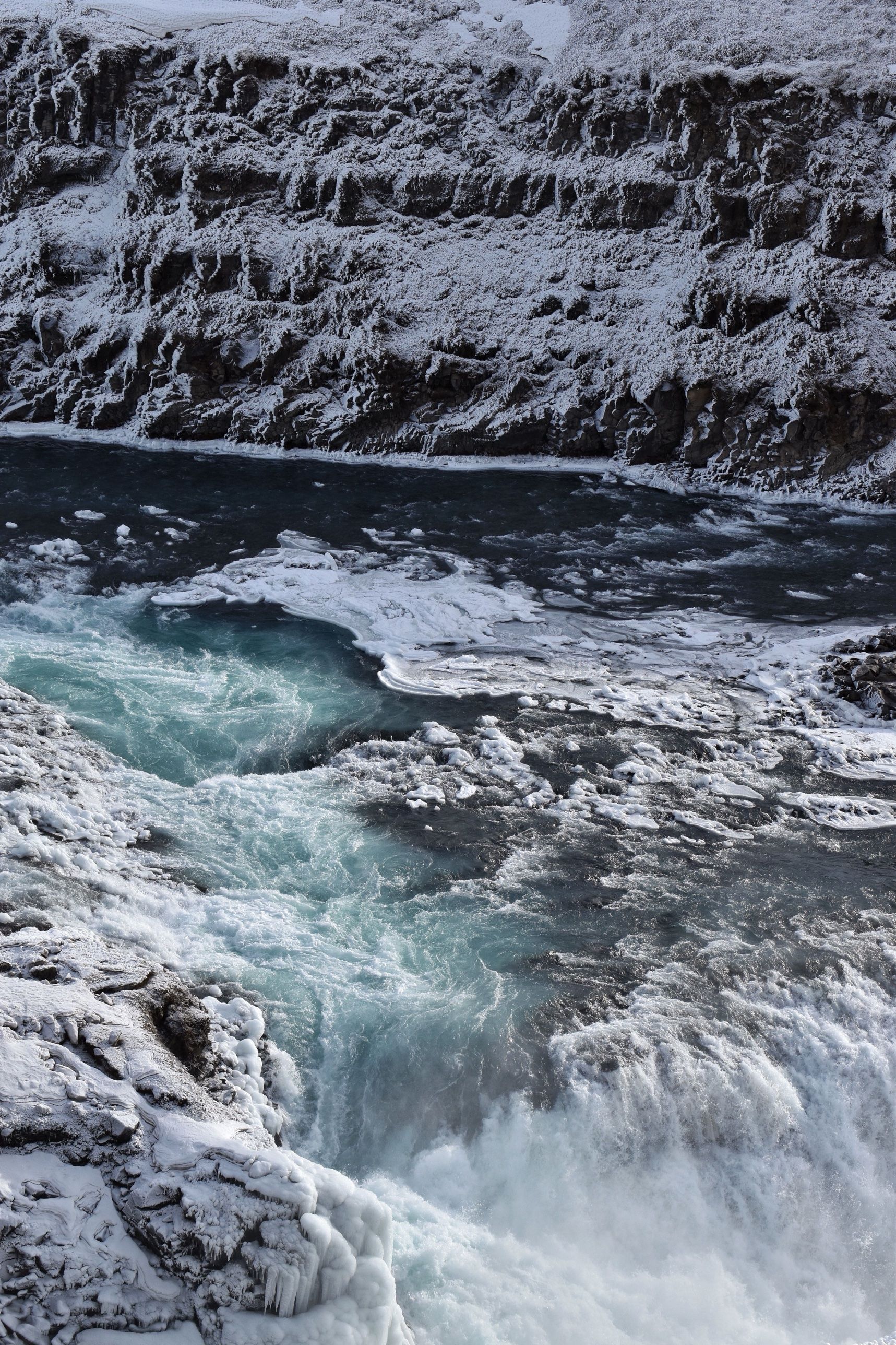
- Gullfoss (Golden Circle): two drops of 11 m and 21 m into a deep canyon on the Hvítá river.
- Dettifoss (North): 44 m high and about 100 m wide, with an average flow of 193 m³/s.
- Goðafoss (North): a 12 m high, 30 m wide horseshoe on the Skjálfandafljót river.
- Dynjandi (Westfjords): about 100 m of tiered water, 30 m wide at the top and 60 m at the base.
- Svartifoss (Skaftafell): a 20 m fall framed by black basalt columns.
- Hengifoss (East): 128 m, with red layers in the cliff behind it.
Add Gljúfrabúi and Kvernufoss on the South Coast, Brúarfoss and Háifoss inland from the Golden Circle, and Kirkjufellsfoss on Snæfellsnes if you have more time.
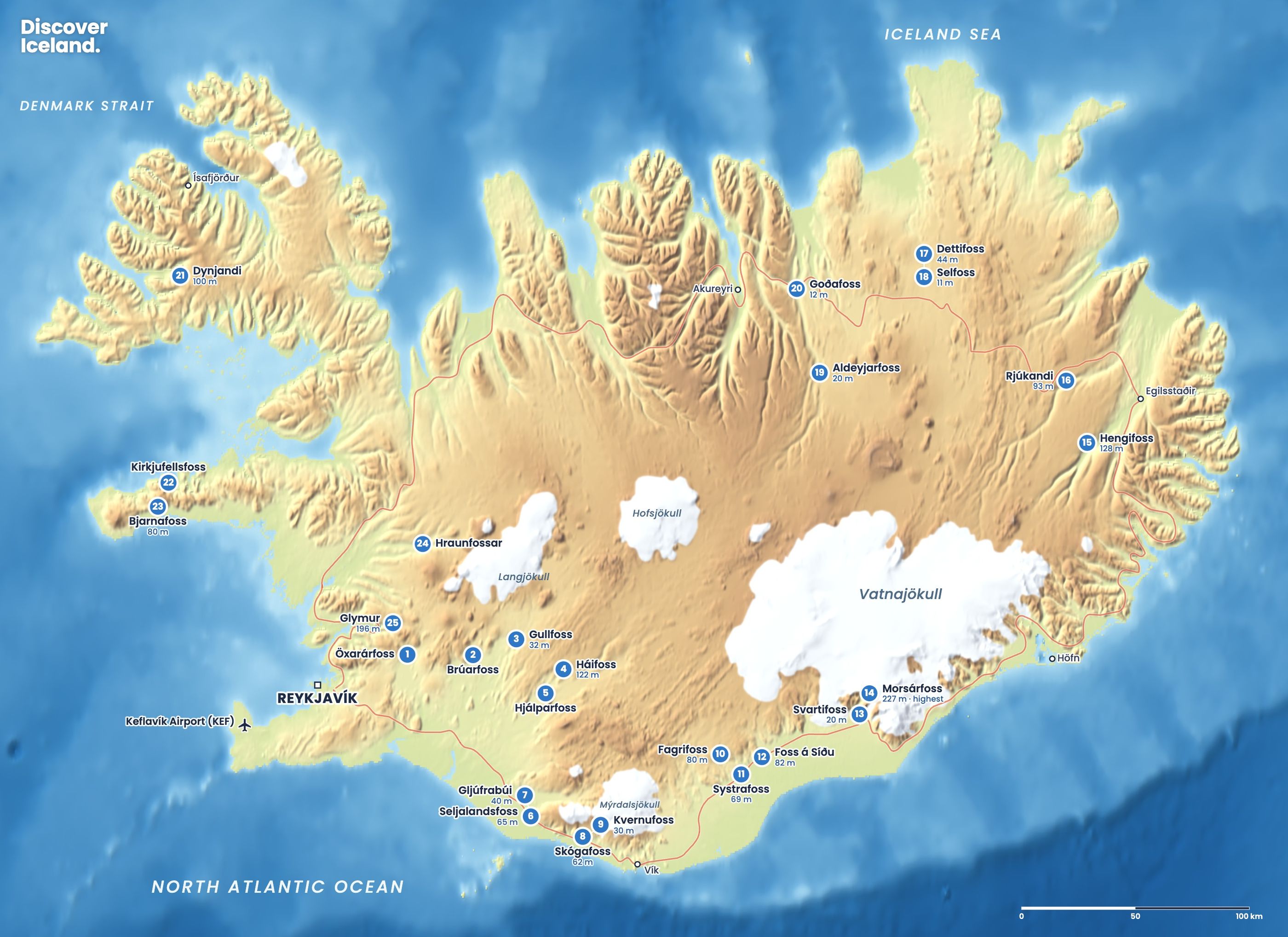
How do Iceland's main waterfalls compare?
Heights for Iceland's waterfalls vary between sources, because it depends where you measure from. The figures below are the commonly published ones, rounded.
| Waterfall | Region | Height | Walk from parking | Winter access |
|---|---|---|---|---|
| Seljalandsfoss | South Coast | 60 m | A few minutes | Yes; path behind closed |
| Gljúfrabúi | South Coast | About 40 m | About 10 min from Seljalandsfoss | Often, with care |
| Skógafoss | South Coast | About 60 m | A few minutes | Yes |
| Kvernufoss | South Coast | About 30–40 m | 15–20 min each way | Icy; no walk behind |
| Svartifoss | Skaftafell | 20 m | About 45 min each way | Yes, with spikes |
| Gullfoss | Golden Circle | 32 m in two drops | A few minutes | Yes; lower path often closed |
| Brúarfoss | Golden Circle | Small, very blue | About 5 min, or 3.5 km each way | Check road |
| Háifoss | Inland south | 122 m | Short walk to viewpoint | Usually not |
| Kirkjufellsfoss | Snæfellsnes | Small | A few minutes | Yes |
| Dynjandi | Westfjords | About 100 m | 15–20 min up | Pass often closed |
| Goðafoss | North | 12 m | A few minutes | Yes |
| Dettifoss | North | 44 m | About 800 m (west side) | West side, limited |
| Hengifoss | East | 128 m | 40–60 min up | Icy trail |
Which waterfalls are on the South Coast?
The South Coast has the most famous run of waterfalls in Iceland, all within a few minutes of Route 1. Seljalandsfoss is about 120 km and two hours from Reykjavík. Skógafoss is 29 km further east, and Vík is another 34 km on.
Seljalandsfoss drops 60 m from a high cliff, and a footpath runs behind the curtain when the path is free of ice. A few hundred metres north, Gljúfrabúi hides inside a narrow gorge. You reach it by wading a shallow stream into the slot.
Skógafoss is wide and loud, and on sunny days the spray often throws a single or double rainbow. The staircase on its east side climbs to a viewpoint at the top and is the start of the Fimmvörðuháls trail. Kvernufoss is a short walk from the Skógar museum car park, in a quiet canyon with a path behind the fall in summer.
Further east, Systrafoss falls above the village of Kirkjubæjarklaustur and Foss á Síðu sits beside an old farm about 10 km beyond it. Svartifoss, in Skaftafell, is a 1.9 km walk from the visitor centre. Our South Coast waterfalls in one day guide has a timed route.
One more South Coast fall is worth knowing about. Urriðafoss on the Þjórsá, Iceland's longest river, is low but carries the highest average flow of any Icelandic waterfall, about 360 m³/s.
Which waterfalls can you see on the Golden Circle?
Gullfoss is the waterfall of the Golden Circle. The Hvítá river drops 11 m, turns, and drops another 21 m into a canyon. It carries about 140 m³/s in summer and about 80 m³/s in winter. It was sold to the state and protected in 1979, and a memorial above the falls remembers Sigríður Tómasdóttir, the farmer's daughter credited with fighting to save it.
Inside Þingvellir National Park, Öxarárfoss falls on the Öxará river, a short walk from the main paths. Faxi, another Golden Circle stop, is only about 7 m high but 80 m wide.
Brúarfoss is small but famous for its bright blue glacial water. You can walk about 3.5 km each way from a free car park on Route 37, or use a paid lot that opened in 2023, about five minutes from the falls along a rough access road.
East of the Golden Circle, Háifoss falls 122 m into a canyon beside its neighbour Granni. The last 7.2 km on road 332 are rough gravel, and a 4x4 is the sensible choice. See Golden Circle extra stops for more detours.
What are the best waterfalls in West Iceland and the Westfjords?
In West Iceland, Hraunfossar is a line of small falls that seep out of the Hallmundarhraun lava field along a stretch of about 900 m. Barnafoss, the "children's falls", is close by, with viewpoints near the bridge. Glymur in Hvalfjörður was long called Iceland's tallest waterfall at about 198 m. The hike to the top takes 2.5 to 3.5 hours or more, with steep slopes and a river crossing, and is best in summer.
On the Snæfellsnes peninsula, Kirkjufellsfoss is a small fall that is famous for its view of Kirkjufell mountain behind it. It is about 180 km from Reykjavík.
Dynjandi is the great waterfall of the Westfjords. It falls about 100 m in a broad, stepped fan, and six smaller named falls line the path below it. The walk up takes 15 to 20 minutes. The road over the Dynjandisheiði pass is high and exposed, so plan Dynjandi for summer. The Westfjords road trip guide covers the drive.
Which waterfalls should you see in North Iceland?
Dettifoss and Goðafoss are the two essential waterfalls of the north. Dettifoss sits in Vatnajökull National Park on the Jökulsá á Fjöllum. It is 44 m high and about 100 m wide, with an average flow of 193 m³/s. Selfoss is a wide, lower fall a short walk upstream, and Hafragilsfoss is a short way downstream.
You can visit Dettifoss from the west on paved road 862 or from the east on gravel road 864. They give very different views and seasons, which we compare in Dettifoss: east or west side?
Goðafoss, the "waterfall of the gods", is about 45 minutes from Akureyri on the way to Mývatn. A popular story says the lawspeaker Þorgeir threw his statues of the old gods into the falls after Iceland adopted Christianity around the year 1000, although historians think the tale is much later. In the highlands, Aldeyjarfoss drops about 20 m and needs a 4x4 in summer.
Which waterfalls are in East Iceland?
East Iceland's headline fall is Hengifoss, at 128 m the third-highest in Iceland. The trail is about 2.5 km each way, and halfway up you pass Litlanesfoss, which is ringed by tall basalt columns. Near Egilsstaðir, Fardagafoss is a short walk from road 93, and Gufufoss sits beside the same road on the descent to Seyðisfjörður. Our East Iceland waterfalls guide has the details.
What are the tallest waterfalls in Iceland?
Morsárfoss is the tallest waterfall in Iceland at about 228 m, but most visitors never see it up close. The tallest falls you can reach on a normal trip are Glymur, Hengifoss and Háifoss. Heights below are the commonly listed figures.
| Waterfall | Height | Region |
|---|---|---|
| Morsárfoss | About 228 m | Skaftafell, remote |
| Glymur | About 198 m | Hvalfjörður, West |
| Hengifoss | 128 m | East |
| Háifoss | 122 m | Inland south |
| Granni | About 101 m | Beside Háifoss |
| Dynjandi | About 100 m | Westfjords |
| Rjúkandi | About 93 m | East, beside Route 1 |
Height is not everything. Dettifoss is only 44 m high but by far the most powerful, and Gullfoss at 32 m is one of the most impressive because of its volume and canyon.
When is the best time of year to see Iceland's waterfalls?
June to September is the best time for most waterfalls in Iceland. Every road is open, including the gravel roads to Háifoss and the east side of Dettifoss, the path behind Seljalandsfoss is usually open, and you get long days. Reykjavík has around 21 hours of daylight at the June solstice, so you can visit the busiest falls late in the evening when the tour buses have gone.
Glacier-fed rivers carry the most water in summer. Gullfoss, for example, carries about 140 m³/s in summer and about 80 m³/s in winter. Winter brings ice formations, quiet car parks and the chance of the aurora over a waterfall, but only four to five hours of daylight in December.
Spring and autumn are a good middle ground, with fewer people and enough light, though the first frosts can close the path behind Seljalandsfoss from autumn.
Which waterfalls need a 4x4 or a long hike?
Most of the famous falls are a short walk from a paved car park, but a few take more effort:
- Háifoss and Granni: rough gravel on road 332; best from June to mid-September.
- Aldeyjarfoss: in the highlands; a 4x4 and a summer visit.
- Glymur: a hike of several hours with a river crossing.
- Dettifoss east side: gravel road 864, usually open only in summer.
- Morsárfoss: Iceland's tallest waterfall at about 228 m. It was revealed as the Morsárjökull glacier retreated and overtook Glymur as the tallest in 2011. It is remote and not a casual walk.
Can you walk behind a waterfall in Iceland?
Yes, at a few. Seljalandsfoss has a footpath behind it, closed when ice forms, usually from about November to March. Kvernufoss near Skógar has a path into a cave behind the fall when it is free of snow. Near Egilsstaðir, you can step behind Fardagafoss to the remains of an old cave. At Gljúfrabúi you walk into the gorge, not behind the water. Full details are in waterfalls you can walk behind.
Do you have to pay to visit Iceland's waterfalls?
The waterfalls themselves are free, but many car parks now charge. Fees are per vehicle and usually paid by app, online or at a machine. Cameras read number plates at some sites, so pay before you leave to avoid a higher charge later.
| Site | Car parking (2026) |
|---|---|
| Seljalandsfoss | About ISK 900 for 24 hours |
| Skógafoss | About ISK 1,000 |
| Skaftafell (for Svartifoss) | About ISK 1,100 |
| Hengifoss | About ISK 1,000 for the day |
| Kirkjufellsfoss | About ISK 700–1,000 |
| Dynjandi | Per-car service charge since 2024 |
Prices change at short notice, so treat these as a guide.
Can you visit Iceland's waterfalls in winter?
Yes. Most of the Ring Road waterfalls stay open all year, and they look completely different with ice around them. Seljalandsfoss, Skógafoss, Gullfoss and Goðafoss are all reachable in normal winter conditions. The path behind Seljalandsfoss and the lower path at Gullfoss close when they ice up. Dettifoss east, Háifoss, Aldeyjarfoss and Dynjandi depend on roads that are closed or not serviced for much of the winter. See Iceland's waterfalls in winter for what stays open.
Pack microspikes from October to April. Spray freezes on every path and step near a waterfall, and the ice is often clear and hard to see.
How do you stay safe at Iceland's waterfalls?
- Stay on the marked paths. Ropes and fences are there because of loose edges, falling rocks or slippery rock.
- Respect closures. If a path is closed, it is closed for a reason, usually ice or rockfall.
- Dress for spray. A waterproof jacket and trousers keep you dry at Seljalandsfoss, Skógafoss and Dettifoss.
- Watch for falling ice in winter. Icicles and ice sheets break off cliffs as the day warms.
- Check conditions daily. Use umferdin.is for roads, vedur.is for wind and weather, and safetravel.is for alerts.
How do you plan a waterfall trip around Iceland?
Build the trip around the Ring Road and add detours. A day on the South Coast covers Seljalandsfoss, Gljúfrabúi, Skógafoss and Kvernufoss. A Golden Circle day gives you Gullfoss, Öxarárfoss and Faxi. On a full Ring Road trip, add Svartifoss, Hengifoss, Dettifoss and Goðafoss. Leave Dynjandi and Kirkjufellsfoss for separate trips to the west.
Visit the busiest falls early in the morning or in the long summer evenings to avoid crowds. If you want photos, our waterfall photography guide covers settings, filters and light. For routes, start with the Ring Road guide, explore every sight on our highlights map, and if you like to plan on paper, our printed guidebooks cover the whole country by season.
Facts checked October 2026. Waterfall heights vary between sources. Parking fees, path closures and winter road service change often; check umferdin.is, vedur.is and safetravel.is before you go.
Sources
- List of waterfalls in Iceland (Wikipedia)
- Dettifoss (North Iceland Marketing Office)
- Gullfoss (Wikipedia)
- Explore the waterfalls of the South Coast (South Iceland)
- Hengifoss and Litlanesfoss (East Iceland)
- Dynjandi waterfall (isnet)
- Parking fees and road tolls in Iceland (Happy Campers)
- Waterfalls in Iceland (Guide to Iceland)