Good Iceland waterfall photography comes down to three things: a tripod and a slow shutter for smooth water, a plan for the spray, and the right light for the season. You do not need expensive gear. A camera or phone with manual control, a tripod, a neutral density filter and a stack of lens cloths will cover almost every fall in the country. Here is how to set up, what to pack and when to go.
What camera settings work best for waterfalls?
Start in manual or aperture priority at your camera's base ISO, usually 100, with an aperture of about f/8 to f/11 for front-to-back sharpness. Then choose the shutter speed for the look you want. The shutter speed changes the water more than any other setting.
| Shutter speed | What the water looks like | Good for |
|---|---|---|
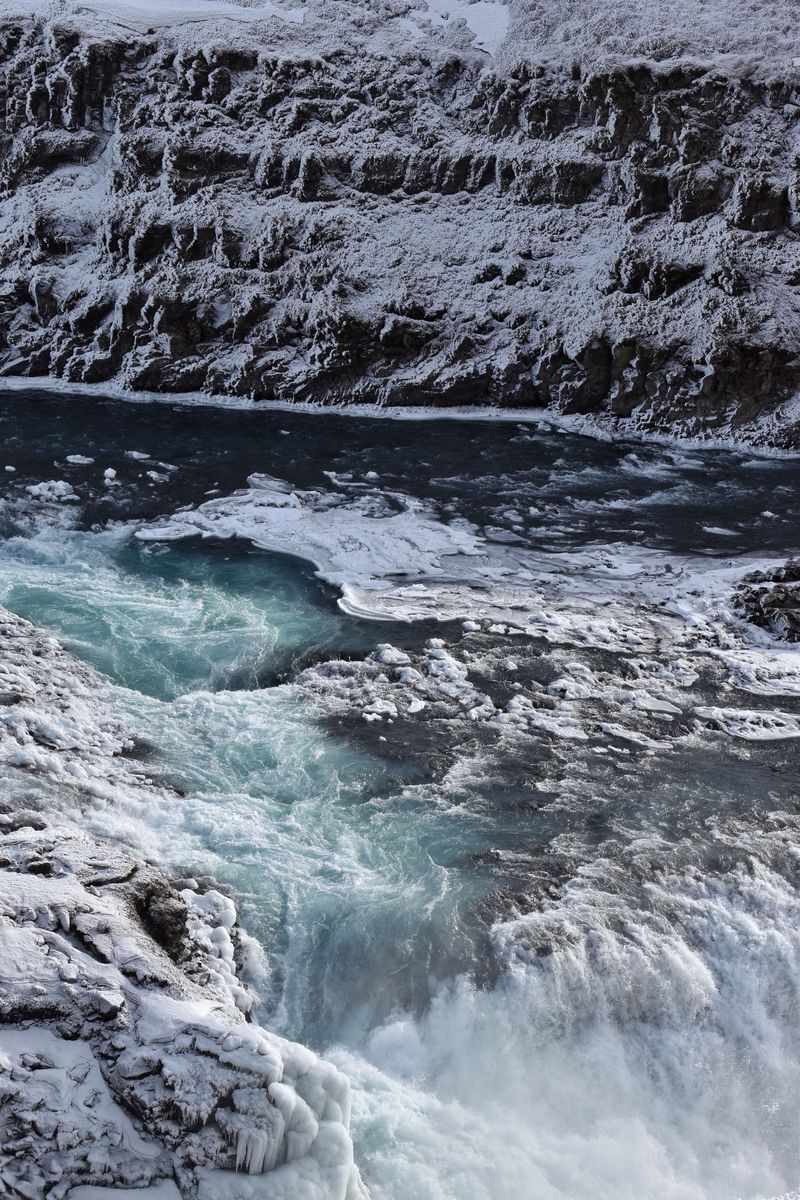
| 1/500 s or faster | Frozen drops and texture | Power: Dettifoss, Gullfoss |
| 1/15 – 1/4 s | Soft but still with detail | Most falls; a safe middle ground |
| 0.5 – 2 s | Silky, smooth streams | Svartifoss, Kirkjufellsfoss, Hraunfossar |
| 10 s or longer | Mist-like water, moving clouds | Calm days, with an ND filter |
Use a two-second timer or a remote so you do not shake the camera when you press the shutter. Shoot several frames at each speed and compare them on the screen. In the wind, shorter exposures are often sharper.
Do you need ND filters for waterfall photos?
For long exposures in daylight, yes. A neutral density (ND) filter cuts the light reaching the sensor so you can use a slow shutter without overexposing. Iceland's summer days are bright and long, so you will want one more often than you might expect.
- 3-stop ND: takes a 1/30 s exposure to about 1/4 s. Enough for soft water on overcast days.
- 6-stop ND: takes 1/60 s to about 1 s. The most useful single filter for waterfalls.
- 10-stop ND: for exposures of many seconds in bright light, and for smoothing moving cloud.
- Circular polariser: cuts the glare on wet rocks and moss and deepens colour. Rotate it slowly: it can strengthen or remove a rainbow in the spray.
Screw-in filters are faster to handle in wind and spray than square filter systems. Take the filter off before shooting at night.
How do you deal with spray at Icelandic waterfalls?
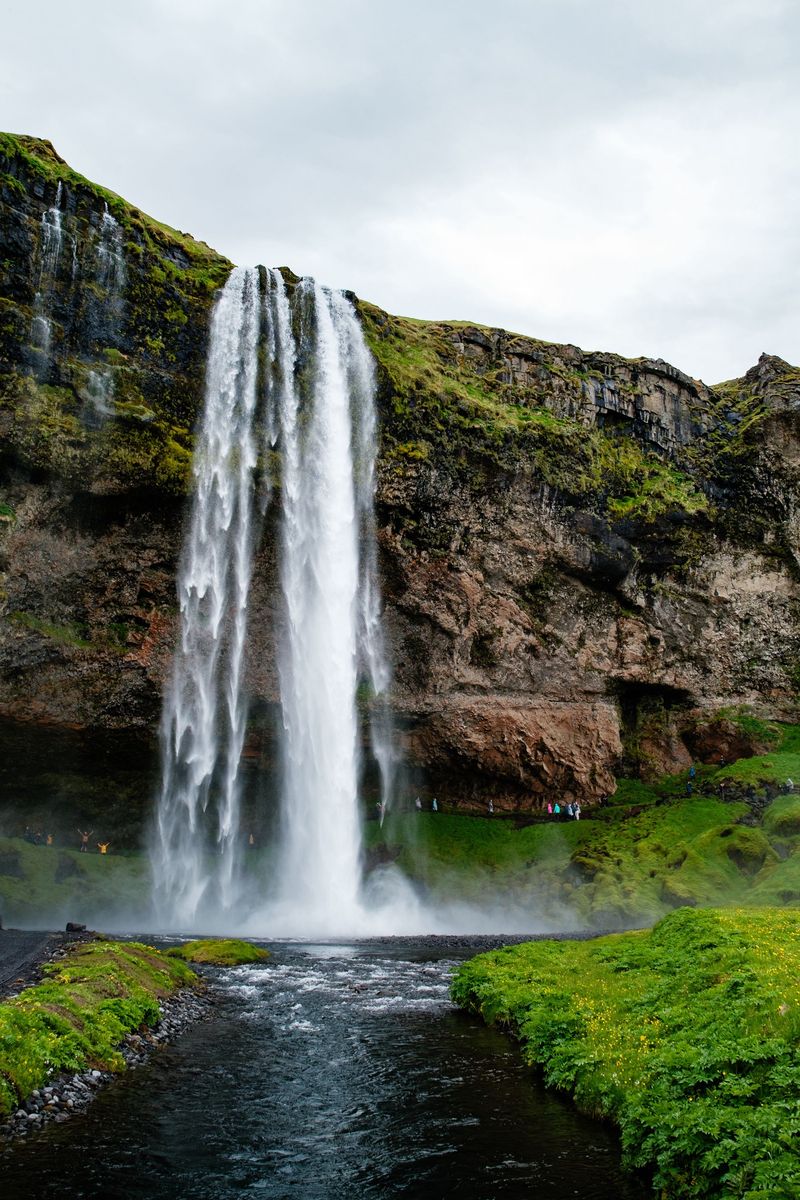
Spray is the biggest problem at big falls like Seljalandsfoss, Skógafoss and the west side of Dettifoss. A single drop on the front element will ruin a long exposure. Work like this:
- Compose and focus with the lens cap on or a cloth over the lens.
- Wait for a lull in the wind, then uncover, shoot and cover again.
- Wipe the lens or filter with a dry microfibre cloth between every few frames. Bring several cloths and keep them in a sealed bag.
- Use a lens hood and a rain cover, or at least a plastic bag, on the camera body.
- Back off. A longer lens from further away often gives a cleaner shot than a wide angle in the mist.
Choose your side carefully. At Dettifoss, the east side usually has little spray, while the west platforms are often soaked. See Dettifoss: east or west side?
When is the best light for waterfall photography in Iceland?
It depends on the season more than the time of day. Iceland's light changes hugely through the year, so plan your shoots around it.
Summer (June to August). Around the June solstice Reykjavík gets about 21 hours of daylight, and the sun sets close to midnight. The midday light is hard and the falls are busy. Shoot in the late evening and around midnight, when the light is warm and low and most visitors have gone. Late evening is a popular time at Seljalandsfoss, when you can shoot the setting sun through the curtain from the path behind it.
Autumn and spring (September, October, March, April). Days of 8 to 16 hours, gentler light and changing colours in the moss and birch. These months are a good balance of light, dark nights and open roads.
Winter (November to February). December gives only 4 to 5 hours of daylight, but the sun stays low all day. The soft, often golden light lasts for hours, and ice around the falls adds texture. You also get dark skies for the aurora. See waterfalls in winter for what is open.
Overcast days are underrated. Flat, even light suits long exposures and keeps the white water from blowing out.
Where can you photograph rainbows at waterfalls?
You need sun behind you and spray in front. Skógafoss is the classic spot: on sunny days its heavy spray often throws a single or double rainbow. Seljalandsfoss and Gullfoss also show rainbows in the right sun. A polariser lets you control how strongly the rainbow shows.
How do you photograph the northern lights over a waterfall?
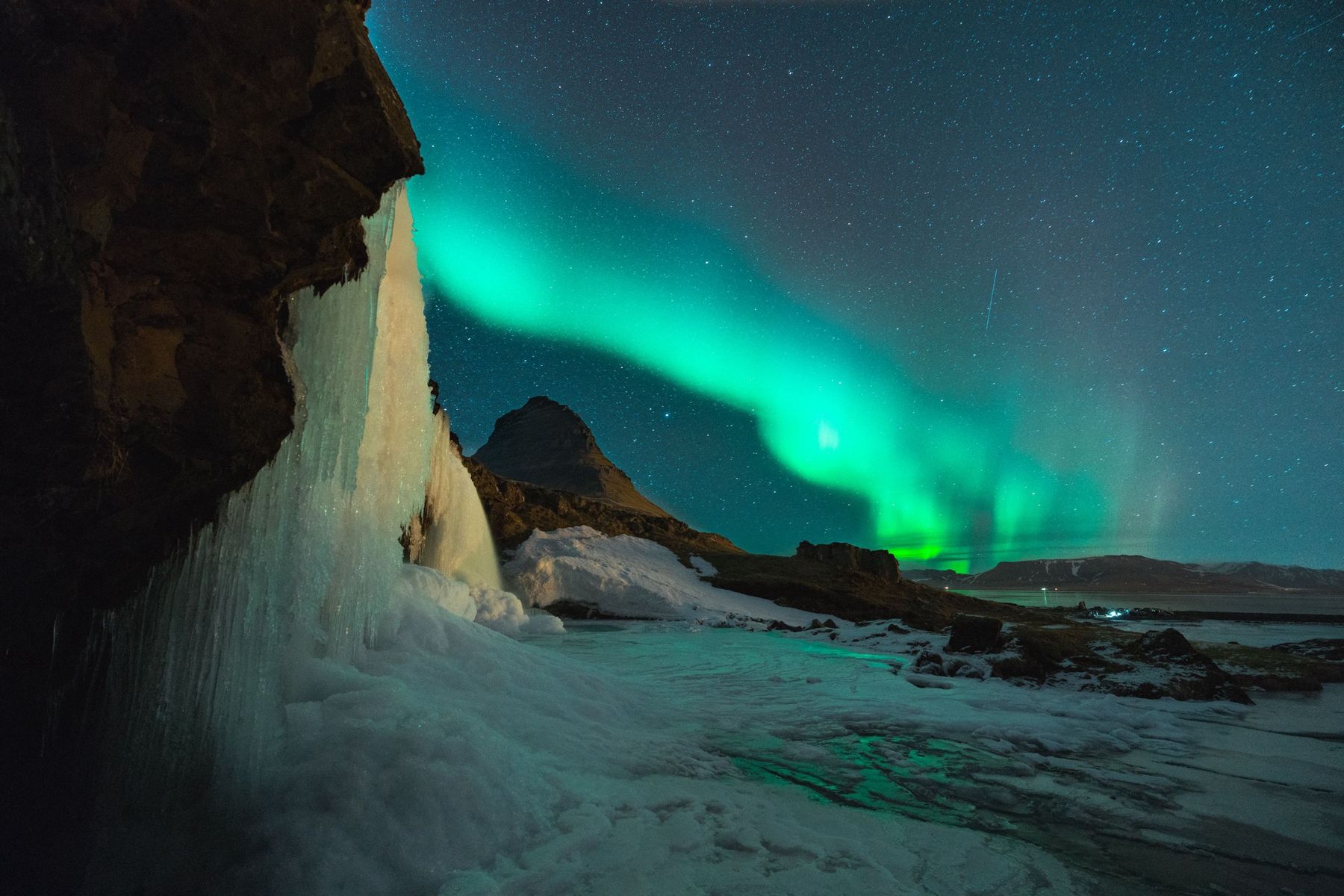
Kirkjufellsfoss on Snæfellsnes, with Kirkjufell behind it, is the best-known aurora and waterfall scene in Iceland. Skógafoss and Seljalandsfoss are also popular, and both are close to dark countryside.
Set up in daylight or blue hour, so you know where to stand and where the ice is. As a starting point, use a wide lens at f/2.8 or its widest aperture, ISO 1600 to 3200 and 5 to 15 seconds. Focus manually on a bright star or a distant light. Our northern lights guide explains the forecasts and the best months.
Bring a head torch with a red-light mode and microspikes for night shoots. Frozen spray turns paths into ice rinks after dark, and you will be walking back in the dark.
Can you fly a drone at Iceland's waterfalls?
Often not. Drone rules are strict and changed in 2026, so check before you fly. In Vatnajökull National Park, drones are banned in most of Skaftafell (including Svartifoss) and most of Jökulsárgljúfur. They are allowed only over the canyon on the west side of Dettifoss, within set hours. Recreational permits are reported to no longer be issued at protected sites such as Gullfoss, Skógafoss and Goðafoss.
Everywhere, the general height limit is 120 m above the ground. Keep away from people and wildlife, and register as an operator if your drone needs it. Rules can change at short notice, so read the managing authority's current page before every flight.
How do you get photos without the crowds?
- Go early or late. In summer the evening and night are quietest; in winter, arrive at first light.
- Use long exposures. A 30-second exposure with a strong ND filter can blur moving people until they almost vanish.
- Pick quieter falls. Kvernufoss, Gljúfrabúi and Litlanesfoss on the Hengifoss trail see far fewer visitors. Read the South Coast waterfalls route and East Iceland waterfalls for ideas.
- Stay on the path. Do not cross ropes or step onto moss for a better angle. Moss takes decades to recover.
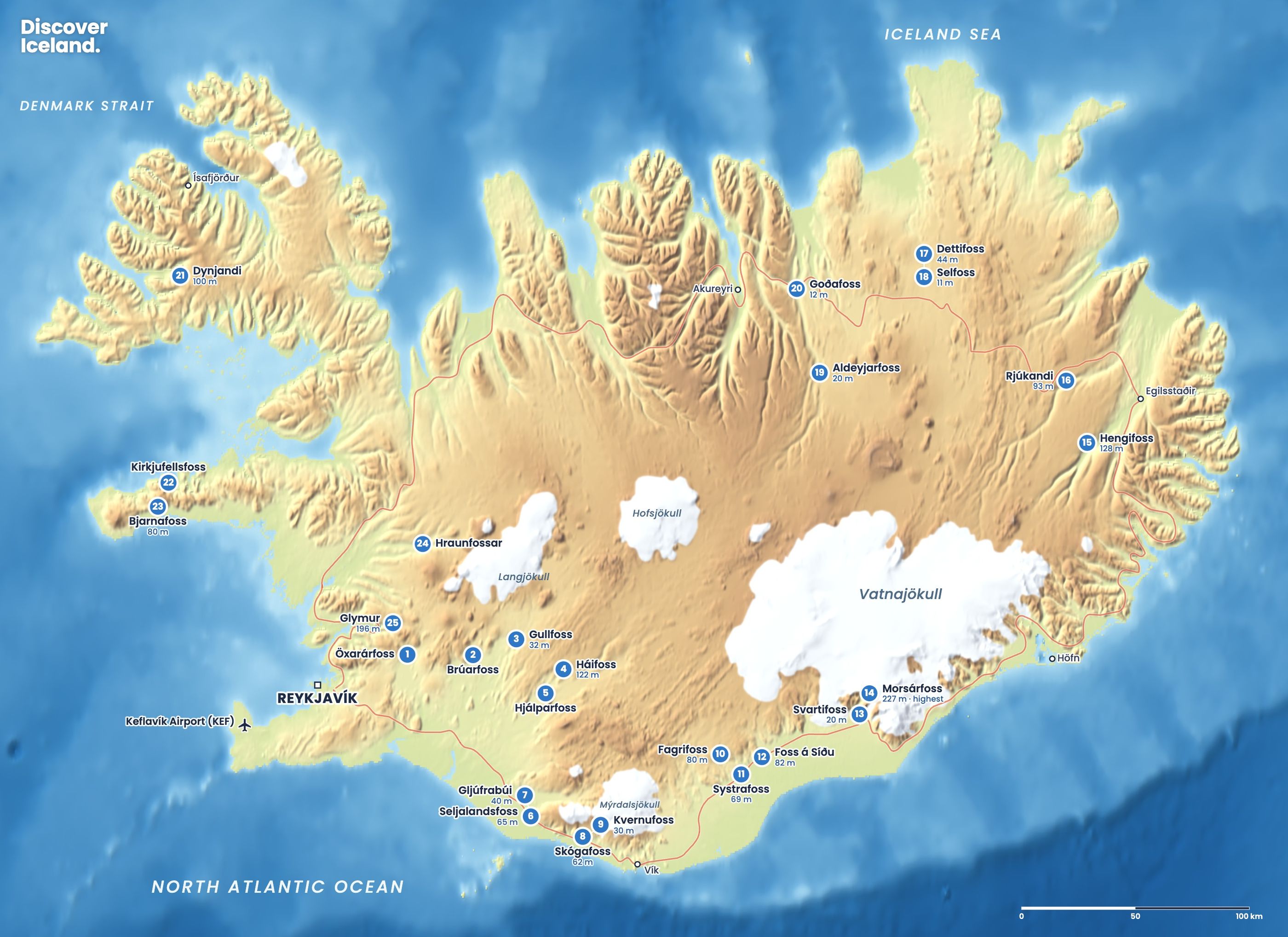
For every major fall on one map, start with Iceland's best waterfalls, and browse the highlights for more scenes to shoot.
Facts checked October 2026. Camera settings are starting points, not rules. Drone regulations in Iceland changed in 2026 and differ by site; always check the managing authority's current rules before flying.