You can see the four best South Coast Iceland waterfalls in one day: Seljalandsfoss, Gljúfrabúi, Skógafoss and Kvernufoss. They sit within about 30 km of each other on Route 1, two hours east of Reykjavík. Allow a full day for the round trip, or continue to Vík and stay the night. Here is the route, with drive times, walks, fees and what each fall is like.
Which waterfalls can you see on the South Coast in one day?
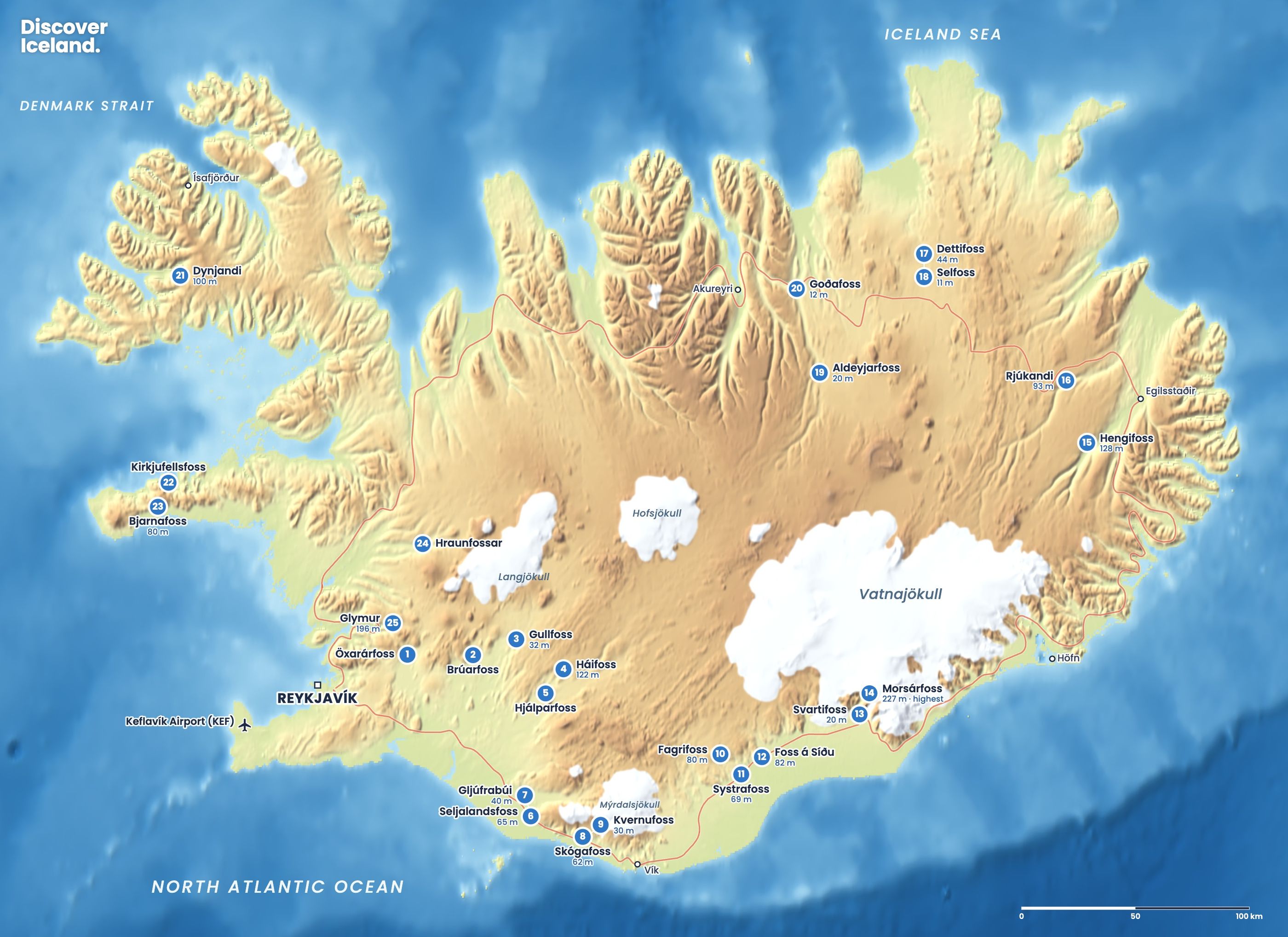
In one day from Reykjavík you can comfortably see Seljalandsfoss, Gljúfrabúi, Skógafoss and Kvernufoss, and still add a black-sand beach. These four are the core of the South Coast. Svartifoss in Skaftafell is also a South Coast waterfall, but it is 140 km beyond Vík, so it belongs on a two-day trip.
Seljalandsfoss and Gljúfrabúi share a car park. Skógafoss and Kvernufoss share the village of Skógar. That means only two real stops, each with a walk, which keeps the day relaxed even with short winter light.
What is the best one-day route?
Drive east on Route 1 and work your way along the coast. Times are for good summer conditions and do not include stops.
| Stop | Drive from previous | Time to allow |
|---|---|---|
| 1. Seljalandsfoss | About 120 km, 2 h from Reykjavík | 45–60 min |
| 2. Gljúfrabúi | On foot, about 10 min | 20–30 min |
| 3. Skógafoss | 29 km, about 25 min | 45–60 min with the stairs |
| 4. Kvernufoss | On foot from the Skógar museum, 15–20 min | About 1 h |
| 5. Optional: Reynisfjara and Vík | About 34 km to Vík | 1–2 h |
Reykjavík to Vík is about 187 km, roughly 2.5 hours of driving. If you go all the way to Vík and back in a day, you will drive about five hours. Leave Reykjavík by 08:00 to beat the tour buses to Seljalandsfoss.
What is Seljalandsfoss like?
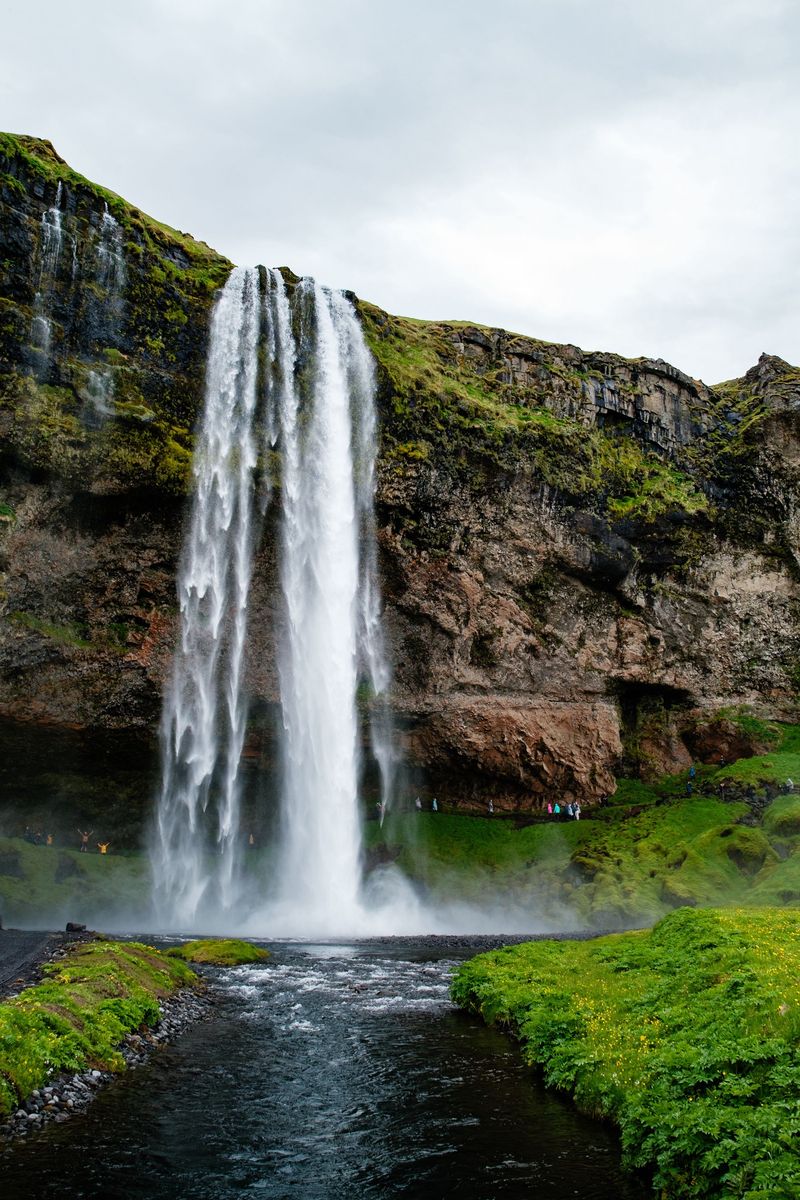
Seljalandsfoss falls about 60 m from a cliff at the foot of the Eyjafjallajökull glacier. Its party trick is the footpath behind the water, so you can see the valley through the curtain. Wear waterproofs: the spray soaks you within a minute.
The path behind the falls is slippery even in summer. It is closed when ice builds up, roughly from November to March, and the farm that runs the site enforces it. Parking costs about ISK 900 for 24 hours (2026), paid at a machine or online.
How do you find Gljúfrabúi?
Gljúfrabúi is a few hundred metres north of Seljalandsfoss, about a 10-minute walk along the foot of the cliff past several smaller falls. The roughly 40 m waterfall is hidden inside a narrow gorge. To see it, you step through a slot in the rock and wade a stream that is usually 10 to 30 cm deep.
Bring waterproof shoes or sandals if you want to go in. Rocks can fall in the gorge, so do not linger under the walls. If you would rather stay dry, you can still glimpse it through the slot from outside.
What is there to see at Skógafoss?
Skógafoss is about 60 m high and 25 m wide, a solid wall of water you can walk right up to On sunny days the spray often makes a single or double rainbow. Parking costs about ISK 1,000 (2026), paid through an app.
A 527-step staircase on the east side climbs to a platform at the top. The path from the top is the start of the Fimmvörðuháls trail between the glaciers, so you can walk as far as you like and turn back. Our Fimmvörðuháls guide covers the full route.
A local legend says the first settler, Þrasi, hid a chest of treasure behind the falls. The Skógar museum next door has an old church door ring said to come from it.
Is Kvernufoss worth the walk?
Yes. Kvernufoss is a quiet 30 to 40 m fall in its own canyon, about 1.5 km east of Skógafoss. Start from the Skógar museum car park and follow the path along the Kverna river. It takes 15 to 20 minutes each way.
Part of the route crosses private land, so you climb a small ladder stile over a fence, which can be awkward for some walkers. In summer, when the area is free of snow, a path leads behind the fall into a large cave. The museum car park may charge a small fee.
Can you add a beach or a glacier?
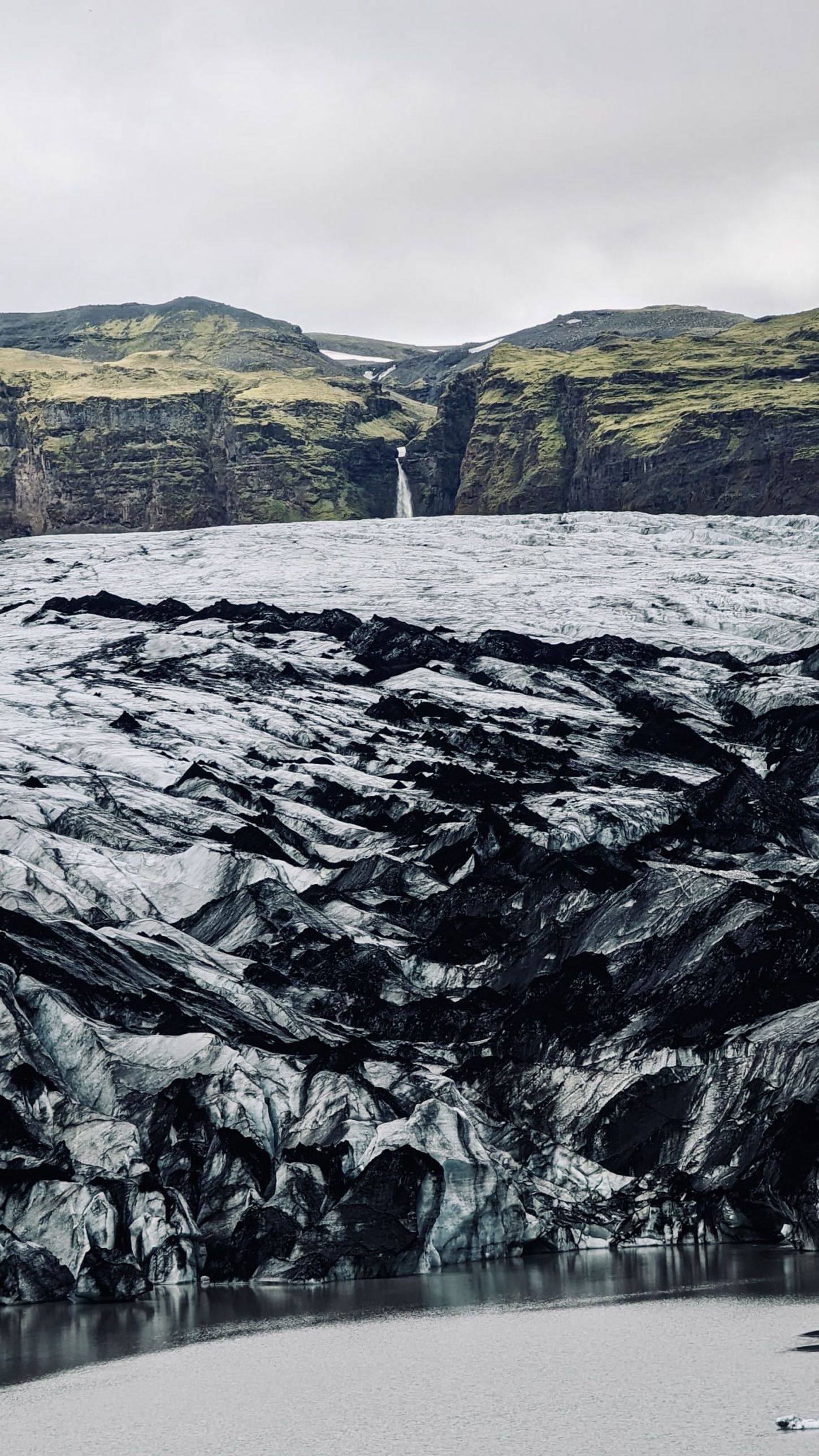
Yes, if you start early. Between Skógar and Vík, the side road to the Sólheimajökull glacier is a popular detour; only walk on the ice with a guide. Reynisfjara black-sand beach is just west of Vík.
At Reynisfjara, never turn your back on the sea and stay well above the wet sand. Sneaker waves reach far up the beach without warning. Swimming there is never safe.
For more stops along this coast, see our South Coast guide.
Which other waterfalls are along the South Coast?
With a second day, keep driving east. Systrafoss falls above Kirkjubæjarklaustur, and Foss á Síðu sits beside an old farm about 10 km further on. Svartifoss in Skaftafell is a 20 m fall framed by black basalt columns, about 1.9 km and 45 minutes each way from the visitor centre.
Closer to Reykjavík, Urriðafoss on the Þjórsá river is a short detour from Route 1. It is low but has the highest average flow of any Icelandic waterfall. The access road is bumpy, and harder in winter.
What should you bring for a South Coast waterfall day?
- Full waterproofs. Jacket and trousers for the spray at Seljalandsfoss and Skógafoss.
- Waterproof shoes or sandals. For the stream into Gljúfrabúi, plus spare socks.
- A payment app or card. Most car parks are paid by app, online or at a machine, not cash.
- Food and fuel. Services between towns are limited, so bring snacks and fill up before you leave the Reykjavík area.
- Microspikes from October to April. Spray freezes on paths and steps.
When is the best time to see the South Coast waterfalls?
Summer is easiest. From June to August you have up to 21 hours of daylight, the path behind Seljalandsfoss is open, and you can visit in the quiet evening hours. Midday in July and August is the busiest time at every stop.
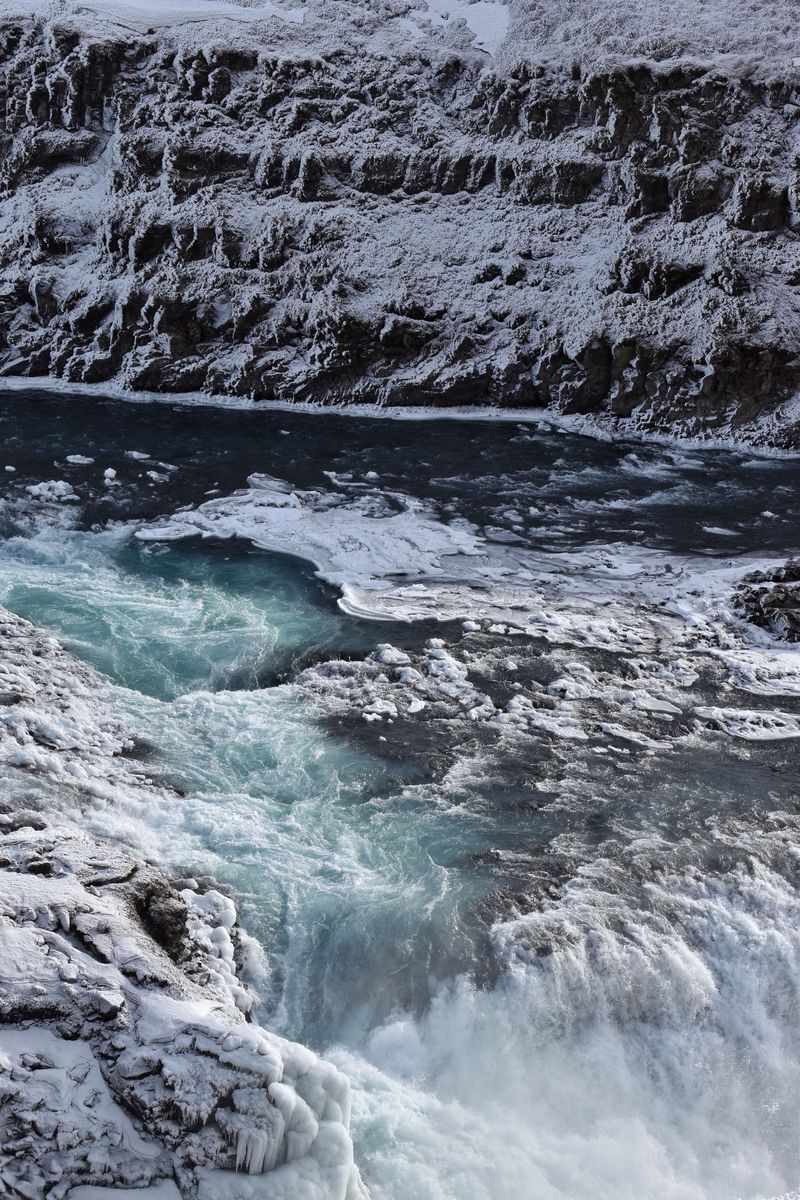
Winter has its own reward: ice around the falls and few people. But daylight in December is only about four to five hours, and the paths are icy. Wear microspikes and check umferdin.is and vedur.is each morning. Our winter waterfalls guide explains what is open. For every waterfall around the island, see Iceland's best waterfalls.
Facts checked October 2026. Drive times are for good conditions without stops. Parking fees and the seasonal closure of the path behind Seljalandsfoss change; check on arrival and on safetravel.is.
Sources
- Reykjavík to Diamond Beach: full driving guide (Guide to Iceland)
- Walking behind Seljalandsfoss and finding Gljúfrabúi (isnet)
- Skógafoss (Wikipedia)
- Explore the waterfalls of the South Coast (South Iceland)
- Tips for visiting Kvernufoss (Adventurous Kate)
- Parking fees and road tolls in Iceland (Happy Campers)
- Iceland daylight hours (Go Campers)