Most of Iceland's best-known waterfalls stay open in winter. Seljalandsfoss, Skógafoss, Gullfoss, Goðafoss and Kirkjufellsfoss sit on main roads and can be visited all season. What changes is the detail: the path behind Seljalandsfoss and the lower path at Gullfoss close once ice forms, and falls on gravel or mountain roads, like Dettifoss east, Háifoss and Dynjandi, are usually out of reach. Here is what to expect at Iceland's waterfalls in winter.
Which waterfalls can you visit in winter?
| Waterfall | Winter access | What changes |
|---|---|---|
| Seljalandsfoss | Open | Path behind the falls closed, roughly Nov–Mar |
| Gljúfrabúi | Usually open | Icy stream and slippery rock |
| Skógafoss | Open | Staircase to the top can be icy |
| Kvernufoss | Trail icy | No walk behind the falls |
| Svartifoss | Open | Trail icy; spikes needed |
| Gullfoss | Open | Lower path often closed Nov–Mar |
| Öxarárfoss | Open | Very slippery; crampons advised |
| Kirkjufellsfoss | Open | Icy ground by the falls |
| Goðafoss | Open | Icy paths |
| Dettifoss (west) | Limited | Road 862 not serviced from about January to mid-March |
| Dettifoss (east) | Closed | Road 864 has no winter service |
| Hengifoss | Open | Icy trail; avoid the gorge |
| Háifoss, Aldeyjarfoss | Usually not | Gravel and highland roads not cleared |
| Dynjandi | Often not | High pass road often closed or difficult |
Is the path behind Seljalandsfoss open in winter?
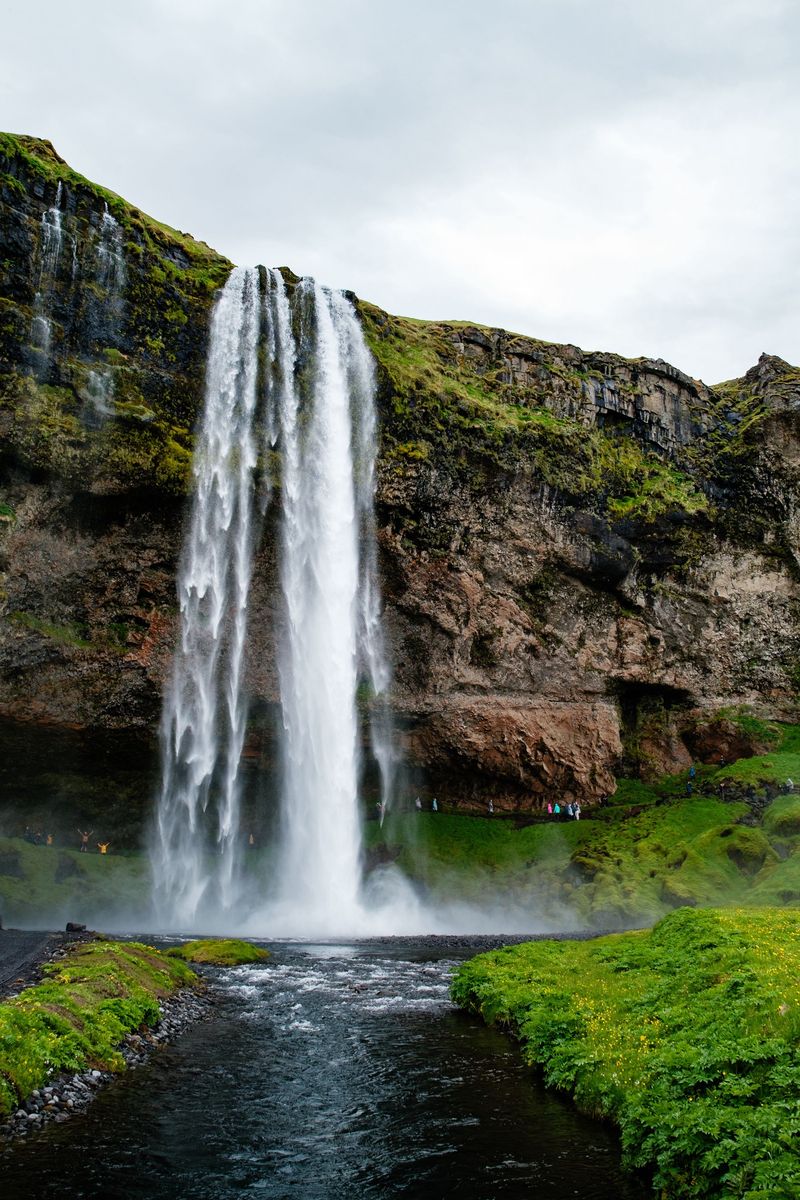
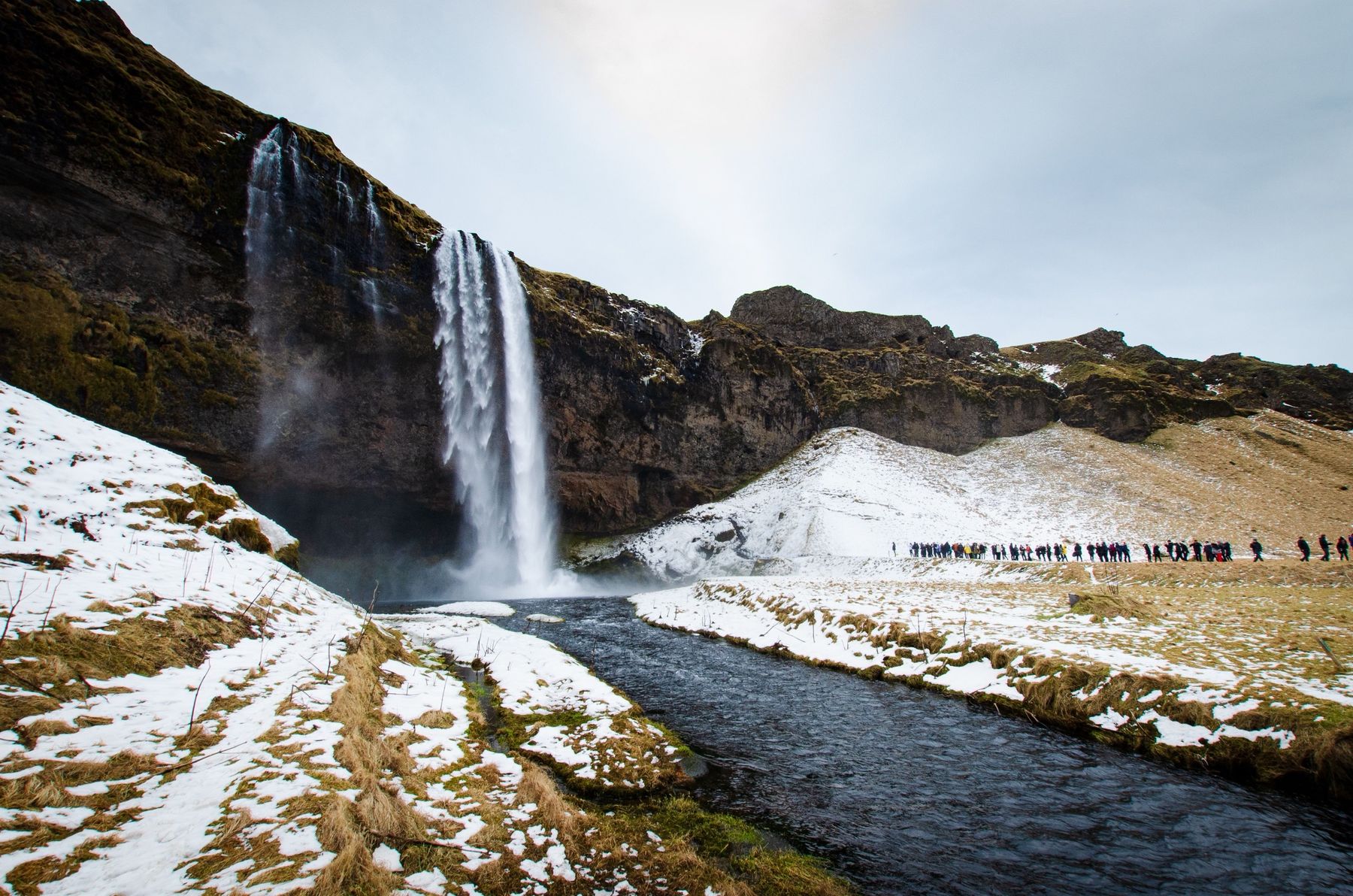
No. The path behind Seljalandsfoss is closed once ice forms, which is roughly from November to March. Spray freezes onto the cliff and the path, and icicles can fall from above. The farm that runs the site closes the path. You can still walk to the front of the falls, and the frozen spray on the slopes is spectacular.
Gljúfrabúi, a 10-minute walk north, is usually reachable in winter, though you may cross water and ice. Take care on the rocks and see waterfalls you can walk behind for when the paths reopen.
What is Gullfoss like in winter?
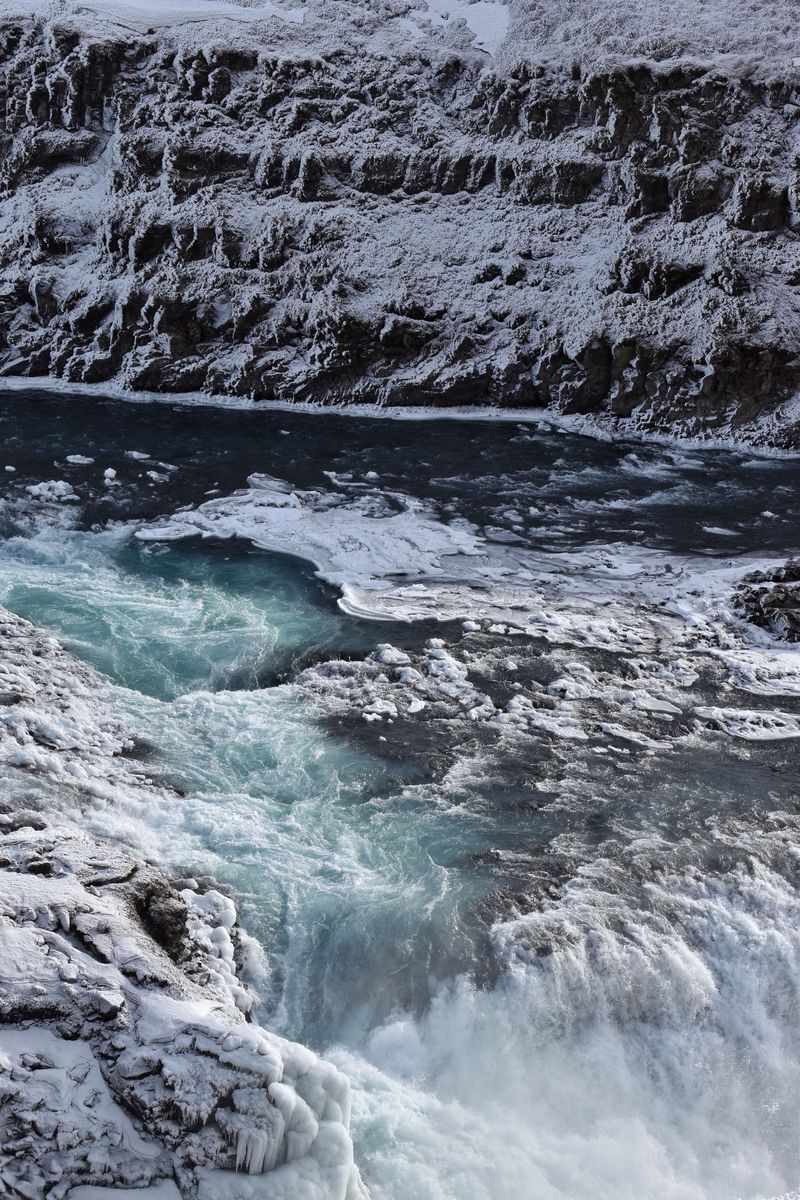
Gullfoss keeps flowing all winter, at about 80 m³/s compared with about 140 m³/s in summer. The upper viewpoint is open in almost all conditions and is a short, level walk from the car park, but it has no shelter from the wind. The lower path that leads close to the first drop closes frequently between November and March.
By midwinter, frozen spray coats the canyon edges and the railings. The visitor centre at the upper car park stays open in winter, with a café and toilets. The Golden Circle in winter guide covers the rest of the route.
What are the South Coast and Skaftafell waterfalls like in winter?
The South Coast is the easiest region for winter waterfalls. Route 1 is a main road with regular winter service, and Seljalandsfoss and Skógafoss are only a few minutes from their car parks. At Skógafoss you can walk to the foot of the falls all winter, but the 527-step staircase to the top can be icy and is not worth the risk without spikes.
Kvernufoss is still worth the walk in winter, but its trail freezes and you should not try to go behind the falls in snow or ice. Further east, the 1.9 km trail to Svartifoss in Skaftafell is often packed snow and ice, so spikes are essential.
Do Iceland's waterfalls freeze in winter?
Partly, but the big ones keep running. Large falls like Gullfoss, Skógafoss and Dettifoss carry too much water to freeze solid. What you see instead is ice building around them: frozen spray on the cliffs, icicles hanging beside the water, and shelves of ice along the canyon rims.
Smaller falls on low-flow streams can partly freeze in long cold spells, which is why photos of Kirkjufellsfoss in winter often show ice around the water. How much ice you get depends on the weather that week, not the month.
How do you stay safe at waterfalls in winter?
The main danger at a waterfall in winter is ice underfoot. Spray freezes into clear, hard ice that is easy to miss, and it covers paths, steps and viewing platforms.
- Wear microspikes or ice cleats. Þingvellir National Park strongly recommends crampons on the Öxarárfoss trail in icy conditions.
- Use the handrails, even if they are coated in ice.
- Stay out from under cliffs. Ice sheets and icicles break off as the day warms.
- Keep well back from frozen edges. Snow can overhang a canyon rim with nothing under it.
- Respect closures. Closed paths are closed because of ice or rockfall.
- Watch the wind. Strong gusts at open viewpoints like Gullfoss can knock you off balance.
Check three things every morning: road conditions on umferdin.is, wind and weather on vedur.is, and alerts on safetravel.is. In winter the weather decides which waterfalls you can reach.
How much daylight is there for waterfalls in winter?
Very little in midwinter. Reykjavík gets about 4 to 5 hours of daylight in December, with sunrise after 10:45 and sunset around 15:30. In February it is already 7 to 10 hours, and by March 10 to 13 hours.
| Month | Daylight in Reykjavík |
|---|---|
| November | About 5–8 h |
| December | About 4–5 h |
| January | About 4.5–7 h |
| February | About 7–10 h |
| March | About 10–13 h |
Plan short driving days and aim to arrive at each waterfall in daylight. The low winter sun gives soft, golden light all day, which is a bonus for photos.
What should you pack for waterfalls in winter?
- Microspikes or ice cleats that fit over your boots. They are the single most useful item.
- Waterproof outer layers. Spray soaks you and then freezes in the wind.
- Warm layers, hat and gloves. Thin liner gloves let you work a phone or camera.
- A head torch. With so little daylight, you may walk back to the car at dusk.
- A flask of something hot. Viewpoints like Gullfoss and Skógafoss are exposed to the wind.
Leave enough time. Walking on ice is slower than on dry gravel, and short paths can take twice as long in January as they do in July.
Which winter waterfall trips work best?
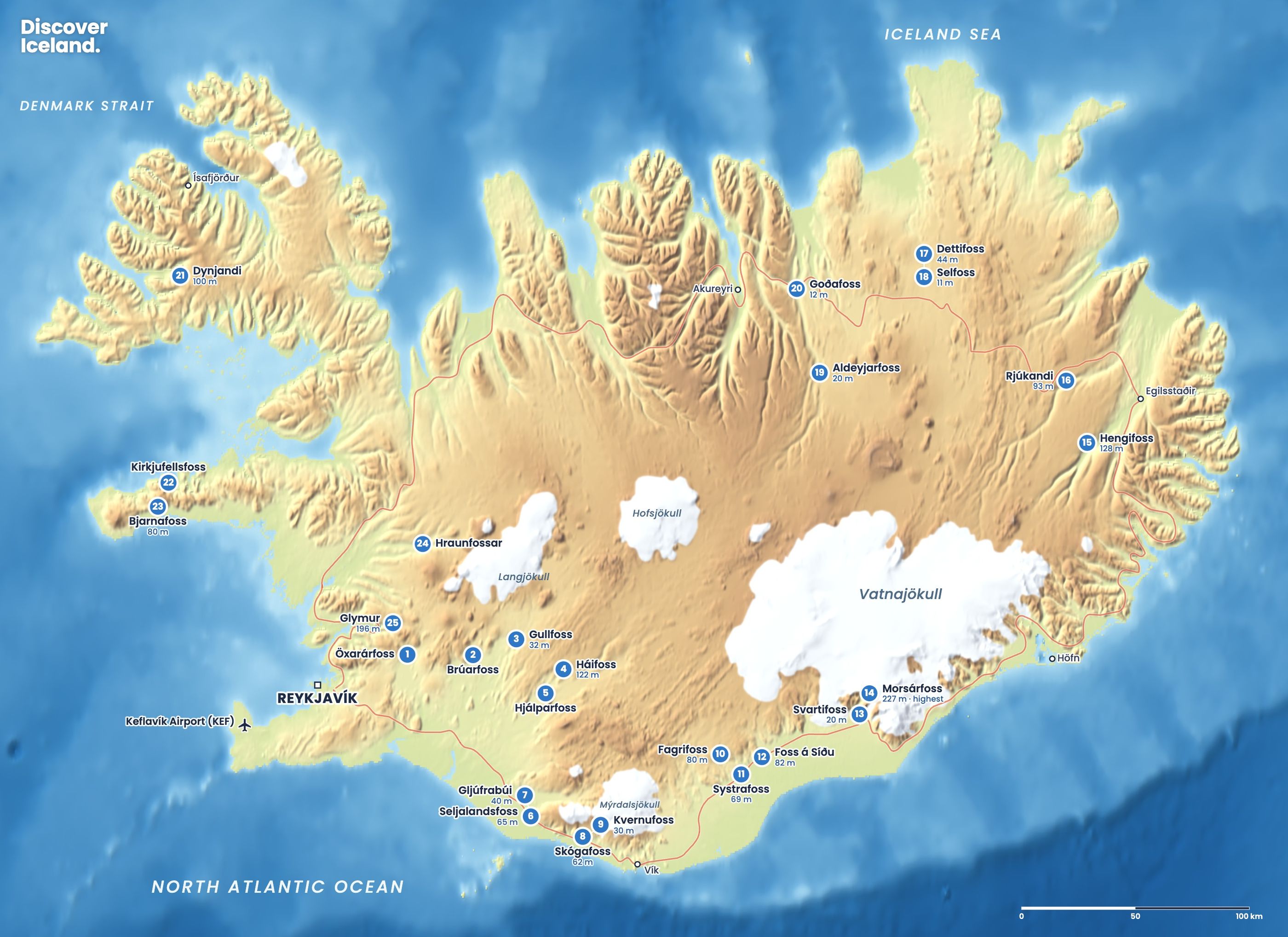
From Reykjavík, the Golden Circle with Gullfoss and Öxarárfoss and the South Coast with Seljalandsfoss and Skógafoss are both good winter day trips. Our South Coast waterfalls route gives drive times. In the north, Goðafoss is easy to reach from Akureyri. Dettifoss is possible from the west side on serviced days, which we explain in Dettifoss: east or west side?
For winter driving, see the Ring Road in winter. If you are hoping for the aurora too, Kirkjufellsfoss and Skógafoss are popular places to wait for it; our northern lights guide explains the forecasts. For every fall on one map, see Iceland's best waterfalls, and for the whole season in print, our Winter guidebook.
Facts checked October 2026. Path closures and winter road service depend on the weather each year. Check umferdin.is, vedur.is and safetravel.is every day you travel.
Sources
- Waterfall Seljalandsfoss in winter (Zigzag on Earth)
- Walking behind Seljalandsfoss (isnet)
- Gullfoss in winter (Golden Circle Day Tours)
- Waterfall Gullfoss in winter (Zigzag on Earth)
- Closed trails (Þingvellir National Park)
- Dettifoss (Visit Akureyri)
- Iceland daylight hours (Go Campers)
- Gullfoss (Wikipedia)