Your Iceland hiking packing list should start with a waterproof jacket and trousers, warm layers, a hat and gloves, sturdy waterproof boots, a map and navigation, and enough food and water. Bring these on every hike, in every season. For hut treks add a sleeping bag and cooking food; for camping add a strong tent; for highland routes add light shoes for wading rivers. Below are checklists for each type of trip.
What should you pack for hiking in Iceland?
Pack for cold, wind and rain, whatever the forecast. Ferðafélag Íslands (FÍ) says every hiker should always carry navigation tools and wind- and waterproof clothing, regardless of season, weather or trip length. In summer, daytime temperatures on the high passes are often only about 5–14°C, and it can freeze at night. SafeTravel warns that hypothermia is common in Iceland even in summer.
The trick is layers. A base layer that wicks sweat, a warm mid layer and a waterproof shell let you adjust as the weather swings from sun to sleet. Avoid cotton, which stays wet and cold.
What is on the day hike checklist?
For a day hike of up to six or seven hours, pack:
- Waterproof, windproof jacket with a hood that fits over a hat.
- Waterproof overtrousers, ideally with side zips to pull on over boots.
- Base layer of merino wool or synthetic fabric.
- Warm mid layer: a fleece or light insulated jacket.
- Hiking trousers that dry quickly; no jeans.
- Warm hat and gloves, even in July.
- Waterproof hiking boots with ankle support and good grip, already broken in.
- Wool hiking socks, plus a spare pair.
- Daypack of about 20–30 litres with a rain cover or a liner bag.
- Water, at least 1–1.5 litres, and a bottle you can refill from clear streams where it is safe.
- Food: lunch and high-energy snacks.
- Navigation: phone with offline maps and the route downloaded, plus a paper map.
- Charged phone and power bank.
- Small first-aid kit with blister plasters.
- Sunglasses and sunscreen: the sun is low and bright, and snow reflects it.
- Swimsuit and small towel if you are walking to a hot spring such as Reykjadalur.
SafeTravel also suggests leaving a note in your car window saying where you have gone and when you expect to be back.
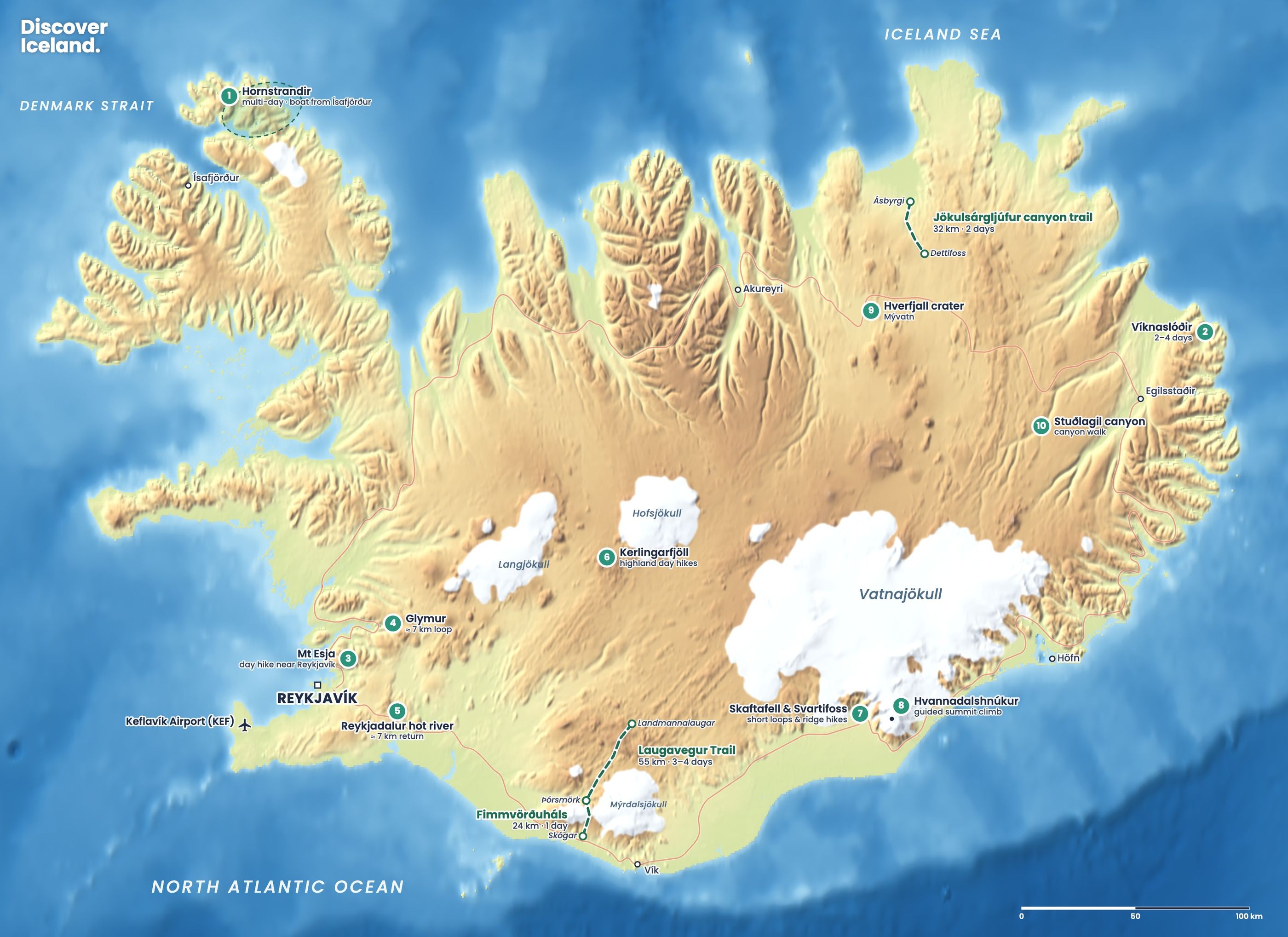
What extra should you pack for a hut-to-hut trek?
For a hut trek such as the Laugavegur Trail, take everything on the day hike list, plus:
- Backpack of about 40–55 litres with a waterproof liner.
- Sleeping bag: FÍ huts provide bunks, but you must bring your own bag.
- All your food: huts have kitchens with gas stoves and pans, but FÍ notes they do not sell hot meals.
- River-crossing shoes: sandals with straps or old trainers. SafeTravel says these are better than crossing barefoot.
- Quick-dry towel for river crossings and showers.
- Spare dry clothes in a waterproof bag, kept for the hut.
- Warm hut layer: a down or synthetic jacket for evenings.
- Trekking poles, useful on descents and in rivers.
- Headtorch for early or late-season trips, when nights get dark.
- Earplugs for busy dormitories.
- Rubbish bags: you carry out everything you bring in.
- Cash or card for paid showers at the huts.
Check your water plan for each stop. FÍ says there is no fresh water at the Baldvinsskáli hut on Fimmvörðuháls, for example, so you must carry enough for the hike and the night. See our Fimmvörðuháls guide for the current warning on that route.
What extra should you pack for camping?
Camping cuts costs and gives you more freedom, but adds weight. On top of the hut list, pack:
- Tent built for strong wind, with plenty of strong pegs. Practise pitching it before the trip.
- Warm sleeping bag rated for night temperatures around freezing.
- Insulated sleeping mat.
- Stove, fuel and pot: you cannot fly with gas canisters, so buy them in Iceland.
- Lighter and spare.
- Eye mask for the bright summer nights.
Camp only at designated campsites, which on the main trails are next to the huts. Book them ahead in July and August.
What safety gear do you need for hiking in Iceland?
- Travel plan: leave one at safetravel.is and with someone at home.
- Navigation: GPS or phone, map and compass, and the skills to use them. Markers can vanish in fog.
- Power bank with enough charge for several days.
- Emergency shelter or foil blanket.
- Whistle to attract attention.
- Personal locator beacon or satellite messenger for remote highland routes, as SafeTravel suggests.
- Emergency numbers: 112 by phone, or 00 354 570 2112 from a satellite phone.
Cross rivers together. SafeTravel advises crossing in groups of two or three with arms linked at the elbows, with backpack straps loosened, and in the morning when the water is usually lower. If in doubt, ask the warden or wait.
What changes in spring, autumn and winter?
Outside summer you need warmer and more specialist kit. Add a thicker insulated jacket, warmer gloves and a spare pair, a buff or balaclava, and a headtorch for the short days. Bring microspikes or crampons for icy paths; many popular trails, including Fjaðrárgljúfur and the paths in Skaftafell, are icy from about November to April. Pack a spare power bank too, because batteries drain fast in the cold. Do not walk onto glaciers on your own at any time of year. Join a guided tour instead; our glacier hiking guide explains what the operators provide.
How do you keep your gear dry?
Keep your gear dry by packing it in layers of waterproofing, not by trusting the backpack. Rain in Iceland often blows sideways, and a pack cover alone will not stop it.
- Pack liner: a large waterproof bag inside your backpack.
- Dry bags: separate bags for your sleeping bag, spare clothes and electronics.
- Zip bags for your phone, map and documents.
- Dry hut clothes: keep one set that never leaves its bag on the trail.
What should you leave at home?
- Cotton clothing and jeans, which stay wet and cold.
- An umbrella: the wind makes it useless.
- Brand-new boots you have not walked in.
- Heavy extras. SafeTravel warns that an overloaded backpack can ruin a trip.
Where can you buy or rent hiking gear in Iceland?
Reykjavík has outdoor shops where you can buy stove fuel, and some companies rent camping gear. Prices in Iceland are high, so bring your boots and clothing from home and consider renting only bulky items such as a tent. Before you go, read our guide to hiking in Iceland to choose your route, and our easy hikes if you are starting small. For more general packing tips, see the best time to visit Iceland.
Facts checked October 2026. Hut facilities and rules vary by route and year; check the hut operator's page before you go, and check vedur.is and safetravel.is before every hike.