Iceland still has natural hot springs you can use for free, but fewer than you might think, and the list is shrinking. Most good springs are on private land, and several have added a small fee to pay for toilets, parking and repairs. These are the free and nearly-free springs that are legal and open to the public in 2026, what each costs, and the etiquette that keeps them open.
Are there free hot springs in Iceland?
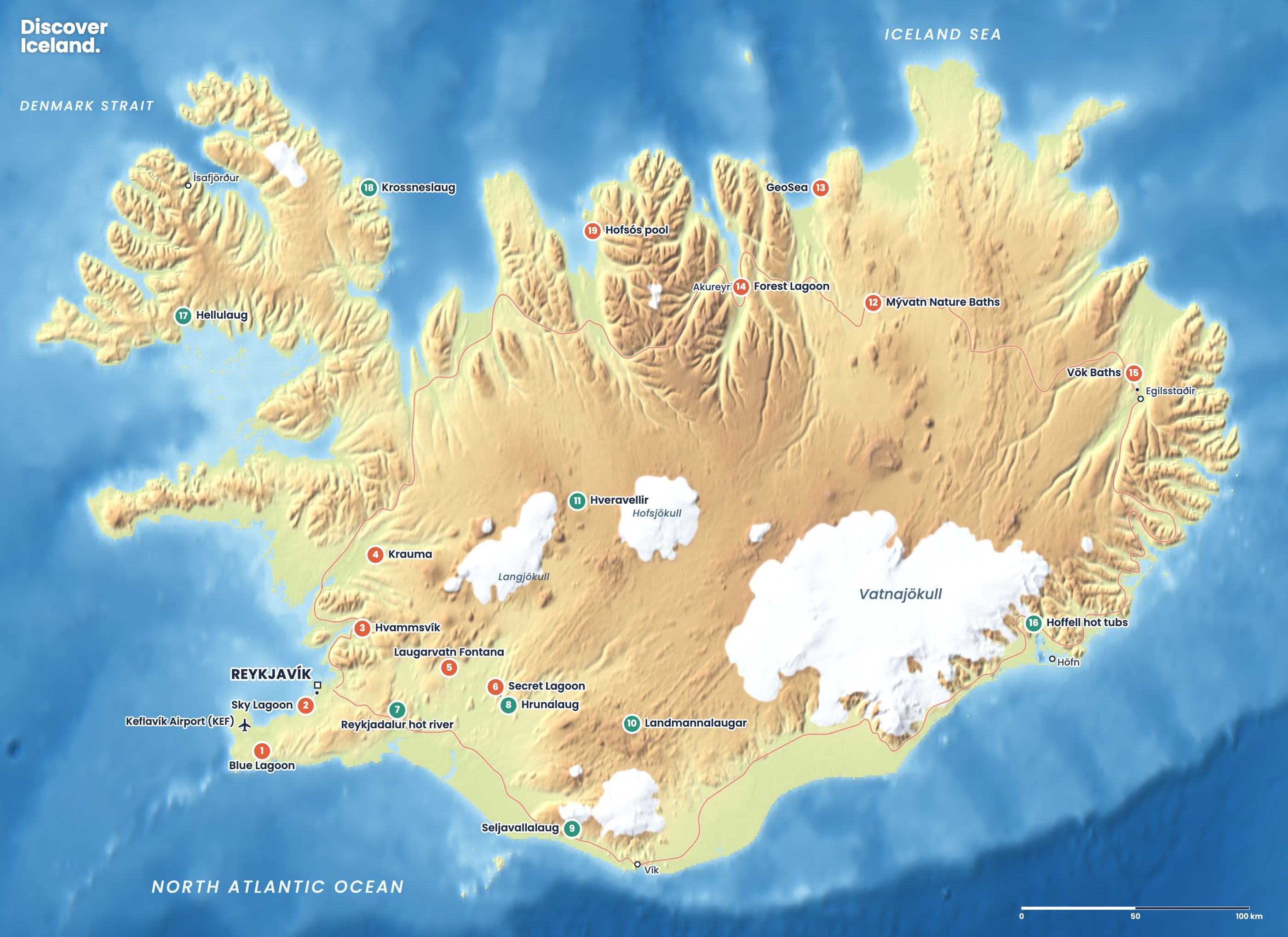
Yes. Reykjadalur, Seljavallalaug, Hellulaug and Landbrotalaug cost nothing to bathe in, though some ask for donations or charge for parking. Others, such as Hrunalaug, Hoffell and Hveravellir, now charge a fee of a few thousand krónur or less. That is still far cheaper than a lagoon, which costs from about ISK 7,500 in 2026.
The cheapest reliable hot water in Iceland is often the town swimming pool. In Reykjavík an adult ticket costs ISK 1,500, and every pool has hot tubs.
Which hot springs in Iceland are free or nearly free?
| Spring | Region | Cost (2026) | Facilities | Season |
|---|---|---|---|---|
| Reykjadalur | Hveragerði | Free; paid parking | Boardwalk, screens | All year |
| Seljavallalaug | South Coast | Free; donation box | Changing shed | All year |
| Hellulaug | Westfjords | Free; donations | None | All year, road permitting |
| Landbrotalaug | Snæfellsnes | Free | None | Best in summer |
| Landmannalaugar | Highlands | Car service fee in summer | Toilets, hut | Summer only |
| Hrunalaug | Flúðir | About ISK 3,000; under-10s free | Changing huts | All year |
| Hveravellir | Highlands | Small service fee | Showers, toilets | Summer only |
| Hoffell hot tubs | Near Höfn | About ISK 3,500; under-8s free | Showers, sauna | All year |
| Krossneslaug | Westfjords | Small fee | Changing rooms | Mid-May to August |
Fees and opening rules change. Check each site before you go, and always pay where a fee or honesty box is posted.
Is Reykjadalur free?
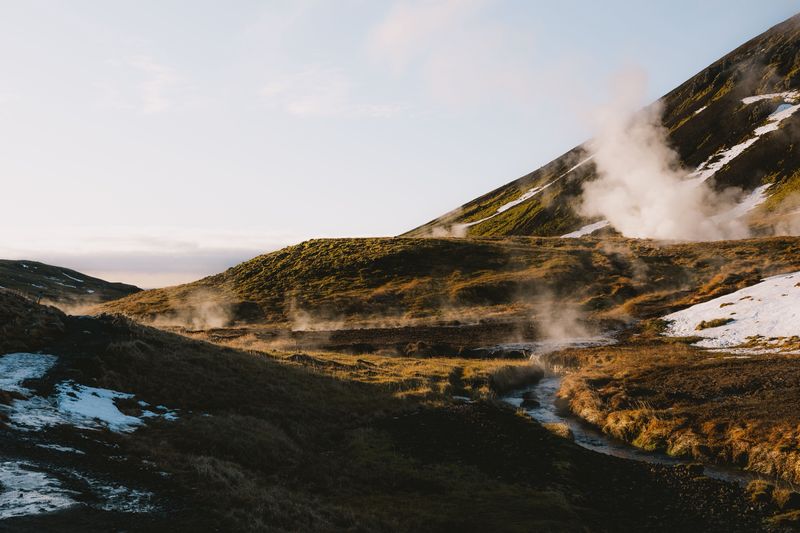
Yes, bathing in the Reykjadalur hot river is free. You pay only for parking at the trailhead above Hveragerði, by the hour, using an app or the card machine. The bathing area is about 3 km up the valley on foot, with boardwalks and simple screens to change behind. It is the most popular free hot spring near Reykjavík, so arrive early in summer. Our Reykjadalur hike guide has the details, and the Reykjadalur place page has a quick summary.
Is Seljavallalaug free?
Yes. Seljavallalaug, built in 1923, has no entry fee, and a donation box helps pay for cleaning. The 25 m pool sits in a valley below Eyjafjallajökull, a 15–20 minute walk from the car park, off Route 1 east of Seljalandsfoss. Volunteers clean it once a year. After the 2010 Eyjafjallajökull eruption buried it in ash, they dug it out by hand.
Set your expectations: the water is often only 20–35°C and can be cooler in winter, and the walls are green with algae. There is a basic changing shed with no toilets, no showers and no bins, so take everything back with you.
Where are the free hot springs in the Westfjords and the west?
Hellulaug is a small natural pool right by the sea at Vatnsfjörður, about 1.5 km from the Flókalundur hotel on road 60. It is about 3–4 m across and roughly 38°C. It is free, with a donation canister for upkeep, and has no facilities, so change discreetly and use the hotel's services.
Landbrotalaug is a tiny pool off road 54 on the eastern Snæfellsnes peninsula, near Eldborg crater. The main pool fits only two or three people at about 38°C. It is on private land, and the owner allows free public access. It was closed for a period and reopened in 2024, so treat it gently and move on if it is busy.
Krossneslaug, on the Strandir coast, is a proper pool with changing rooms rather than a wild spring, but it costs only a small fee. It opens from about mid-May to the end of August. Plan these on a Westfjords road trip.
Which hot springs now charge a fee?
Several springs that were once free now charge, usually to fund toilets, parking and staff. The fee is the price of keeping them open.
- Hrunalaug near Flúðir is on a family farm. In 2026 adults pay about ISK 3,000, youth about ISK 2,000 and children under 10 go free. Visits are capped at 90 minutes, and in winter payment works on an honesty system.
- Landmannalaugar in the highlands is free to bathe in, but in recent summers private cars arriving in the daytime from 20 June to mid-September needed a booked parking slot and a service fee. The fee pays for wardens and 24-hour toilets. See our Landmannalaugar hiking guide.
- Hveravellir on the Kjölur route charges a small service fee that covers the pool, showers and toilets. The road is open only in summer.
- Hoffell hot tubs, near Höfn and an outlet glacier of Vatnajökull, charged about ISK 3,500 when we checked, with children under 8 free.
Which hot springs can you not bathe in?
Some famous springs are closed to bathing, and you should respect that. Grjótagjá, the lava cave at Mývatn, is too hot and unpredictable for bathing since the Krafla eruptions of 1975–1984 heated its water. Its landowners ask visitors only to look. Nearby Kvennagjá was fenced off by its owners in 2018 after visitors left rubbish and human waste and washed dishes in it.
Many hot streams in geothermal areas are far too hot to touch. Never bathe in a pool or stream unless it is clearly used for bathing, and never step off marked paths at places like Geysir or Reykjadalur. The ground can be a thin crust over boiling mud.
What is the etiquette at natural hot springs?
At natural springs there are no showers or staff, so the rules are about respect. Locals are relaxed about bodies, but most visitors wear swimsuits.
- Pay where asked. Use the honesty box or app, even if no one is watching.
- Share the pool. Small pools fit only a few people. Do not stay for hours if others are waiting.
- Keep it quiet. No music speakers. Many people come for the peace.
- Ask before going nude. Skinny dipping is generally accepted at remote springs, but ask anyone already there first.
- No soap, shampoo or glass. They pollute the water and break on rocks.
- Do not camp at the spring. Use campsites, and do not drive off the road to reach a pool.
How do you leave no trace at a hot spring?
Leave the spring exactly as you found it. Most closures in Iceland have followed damage and litter, not overcrowding alone.
- Use the toilet before you arrive. Most wild springs have none. Never go near the water.
- Pack out everything. Bottles, food wrappers, tissues and even orange peel stay with you until you find a bin.
- Stay on paths. Moss around springs takes decades to recover once crushed.
- Do not build or move rocks. Leave pools and dams as they are.
- Change discreetly. Use the screens or sheds where they exist, and keep clothes off the vegetation.
Remember: the free springs stay free because landowners allow it. One bad visit can close a pool for everyone.
For the paid lagoons and every pool on our map, see the full guide to hot springs in Iceland.
Facts checked October 2026. Fees at natural springs change often, and landowners can close access at any time; check before you go and follow local signs. Highland springs are reachable only when the mountain roads are open in summer.
Sources
- Seljavallalaug travel guide (Guide to Iceland)
- Hrunalaug Hot Spring (Hot Springs Guides)
- Hellulaug Hot Spring (Hot Springs Guides)
- Landbrotalaug (Hot Springs Guides)
- Landmannalaugar FAQ: reservations and service fee (Environment Agency of Iceland)
- Hoffell Hot Tubs (Hot Springs Guides)
- Landowners close off natural hot pool (Iceland Monitor)
- Nudity in Iceland: when and where (Guide to Iceland)