Þingvellir National Park, often written Thingvellir, is where you can walk through a rift valley between two tectonic plates, about 40 km northeast of Reykjavík. It is also where Iceland's parliament, the Alþingi, met from 930 for more than 800 years. Plan one to two hours for the main walk through the Almannagjá gorge, longer if you snorkel in Silfra. Parking costs ISK 1,000 for a normal car.
Can you really walk between two continents at Þingvellir?
Yes, in a sense. Þingvellir lies in a rift valley about seven kilometres wide where the North American and Eurasian plates are moving apart. The western edge is the Almannagjá fault, the largest in the park, and you walk along the foot of the North American side when you follow the main path.
The valley is not a neat line between continents. It is a zone of cracks, fissures and sunken land. According to the national park, the plates move apart at about 2 cm a year. Since the lava here flowed around 10,000 years ago, the valley floor has sunk about 40 metres and spread by about 70 metres. Even since 930, it has dropped almost four metres.
What is the Almannagjá walk like?
The Almannagjá walk is an easy, mostly level path between high rock walls. It starts at the visitor centre at Hakið, where a viewing platform looks out over the valley and the lake. From there a wide path runs down into the gorge.
- Hakið viewpoint: the best view of the rift, Þingvallavatn lake and the old assembly site.
- Almannagjá: walk down between the fault walls, with the cliff of the North American plate on your left.
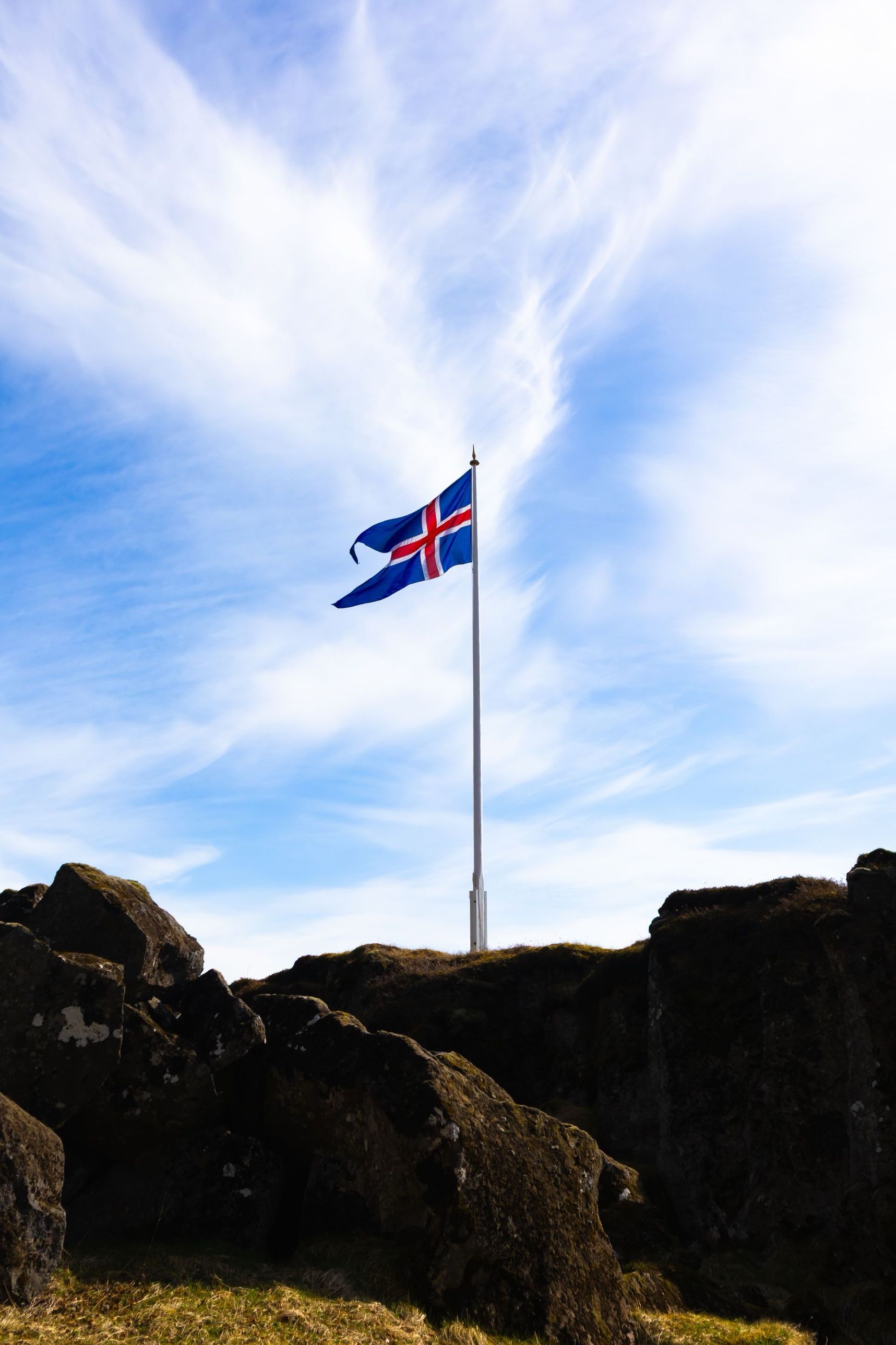
- Lögberg (Law Rock): marked by a flagpole, this is where the Lawspeaker recited the law to the assembly.
- Öxarárfoss: a short walk further north, the Öxará river drops over the Almannagjá cliff.
- Þingvallakirkja: cross the river to the small church and the old farm buildings by the lake.
Allow one to two hours for the walk and the viewpoints. In winter the path can be icy, so wear boots with grip or ice cleats. Stay on the marked paths: the moss is fragile and some fissures are deep and hidden.
Why is Þingvellir important in Iceland's history?
Þingvellir is where Iceland's national assembly, the Alþingi, was founded in 930. Chieftains and farmers gathered here every summer to pass laws and settle disputes, and the Lawspeaker recited the law from the Law Rock. The assembly met at Þingvellir until the end of the 18th century.
The site stayed a national symbol. Legislation protected it in 1928, and the national park was founded in 1930, the thousandth anniversary of the Alþingi. On 17 June 1944 Iceland declared its independence from Denmark here. UNESCO listed Þingvellir as a World Heritage Site in 2004 for its cultural value.
What is Silfra, and can you snorkel there?
Silfra is a water-filled fissure at the edge of Þingvallavatn, and yes, you can snorkel or dive in it with a licensed operator. The water comes from the Langjökull glacier about 50 km north and filters through porous lava for 30 to 100 years. The result is some of the clearest water anywhere, with visibility often quoted at more than 100 metres.
The catch is the cold. Silfra stays at 2–4°C all year, so snorkellers wear thick wetsuits or drysuits with hood, gloves and boots. The park's rules include:
- Always go with a buddy; entering alone is not allowed.
- Divers need a drysuit certification and a recognised diving licence, and the maximum depth is 18 metres.
- Caves and overhead areas are off-limits.
- Everyone needs a permit and a health declaration; operators include this when you book.
Guided snorkelling tours start from about ISK 20,000 with one operator, gear included. Book ahead in summer. Operators screen every participant for health and swimming ability.
How much is parking at Þingvellir?
Parking at Þingvellir costs ISK 1,000 a day for a car with up to five seats. One payment covers the three main car parks for the whole day of payment, so you can move between them.
| Vehicle | Fee |
|---|---|
| Motorcycle | ISK 400 |
| Car, 5 seats or fewer | ISK 1,000 |
| Car or van, 6–9 seats | ISK 1,200 |
| Minibus, 10–19 seats | ISK 2,200 |
Pay at the machines at the visitor centre, the toilet building next to it, P2 and P5, or online at checkit.is. Cameras at Hakið read number plates, so do not skip it. Visitors with a disabled parking permit park free but must register their plate at the visitor centre or by email.
Which car park should you use?
- P1 Hakið: at the top of Almannagjá by the visitor centre. Best for the viewpoint and the walk down the gorge.
- P2 Efri-Vellir: east of and below Öxarárfoss. Good for a short walk to the waterfall.
- P5 Valhöll: nearest to the church and to Silfra. Use this one for snorkelling and diving.
A good plan is to park at P1, walk down through the gorge to Öxarárfoss and back, then drive to P5 if you are snorkelling or want the lakeshore.
When is the best time to visit Þingvellir?
Go early in the morning or late in the afternoon. The tour coaches arrive from mid-morning, and the path through Almannagjá gets busy around midday in summer. The light is also better low in the sky, when the fault walls throw long shadows.
Þingvellir is open all year. In winter it is quieter and often snowy, and its dark skies, away from the city lights, make it a good place to look for the northern lights. See our Golden Circle in winter guide.
Can you camp or swim anywhere else at Þingvellir?
Yes. The park has two campsites, Leirar and Vatnskot, open mainly in summer with basic facilities. Use them rather than pitching a tent or parking a campervan anywhere else.
Experienced divers can also visit Davíðsgjá, a second rift in the north-eastern part of Þingvallavatn. It lies inside the lake, so you swim some distance from the bank before it deepens and widens. The same permit and safety rules apply as at Silfra.
How do you get to Þingvellir and where do you go next?
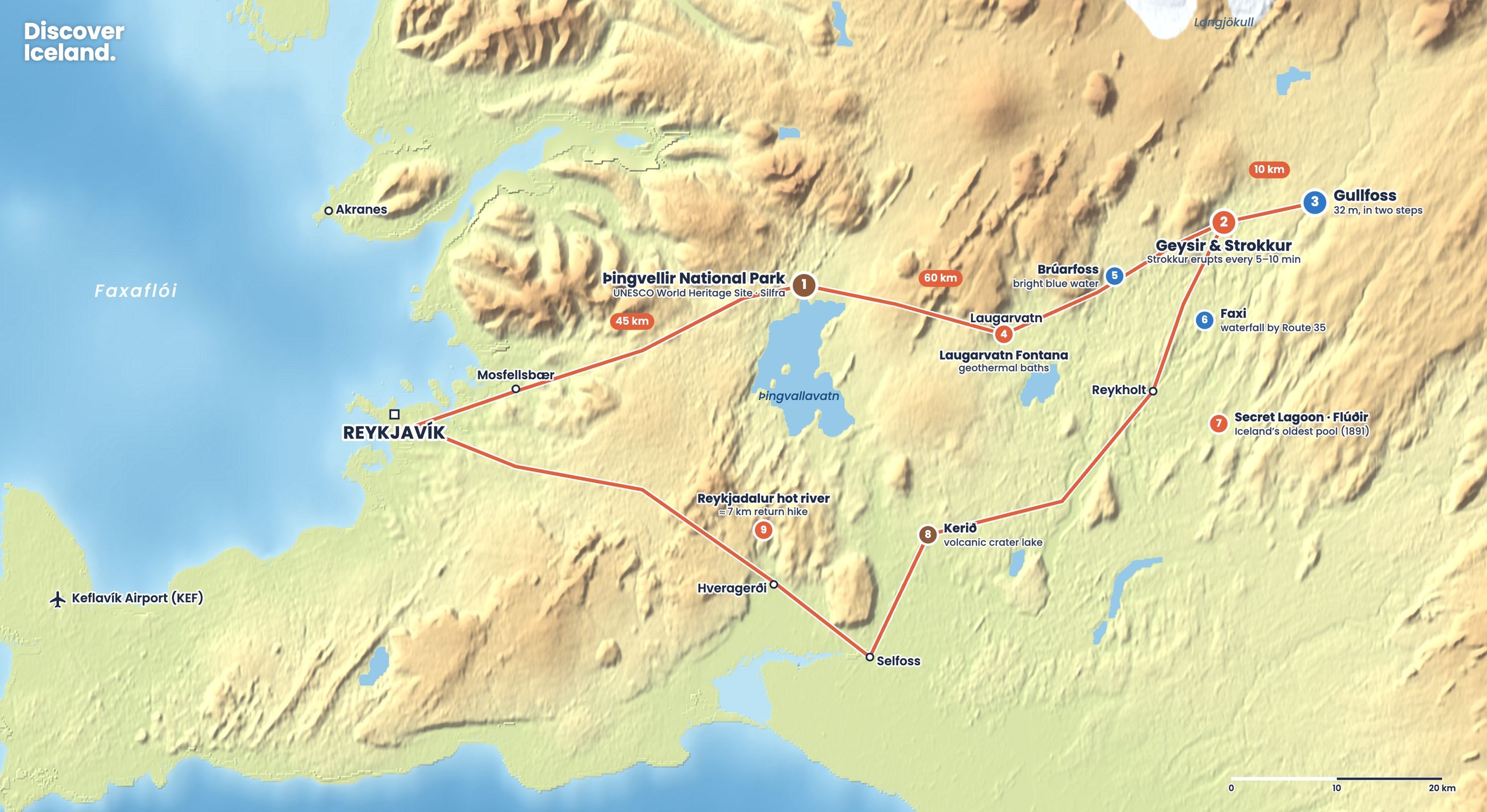
From Reykjavík, take Route 1 north and turn onto Route 36. The drive is about 45 minutes. Þingvellir is the first stop on the classic loop; from here Route 365 leads over the heath to Laugarvatn, and on to Geysir and Gullfoss. Our Golden Circle self-drive guide has the full route, and the Þingvellir place page has photos and the map.
Bring cash or a card for the parking machine, and leave a couple of hours. Þingvellir rewards slow walking more than a quick photo stop.
Facts checked October 2026. Parking fees are from the national park's own page; Silfra tour prices and rules change, so check with your operator and the park before booking.