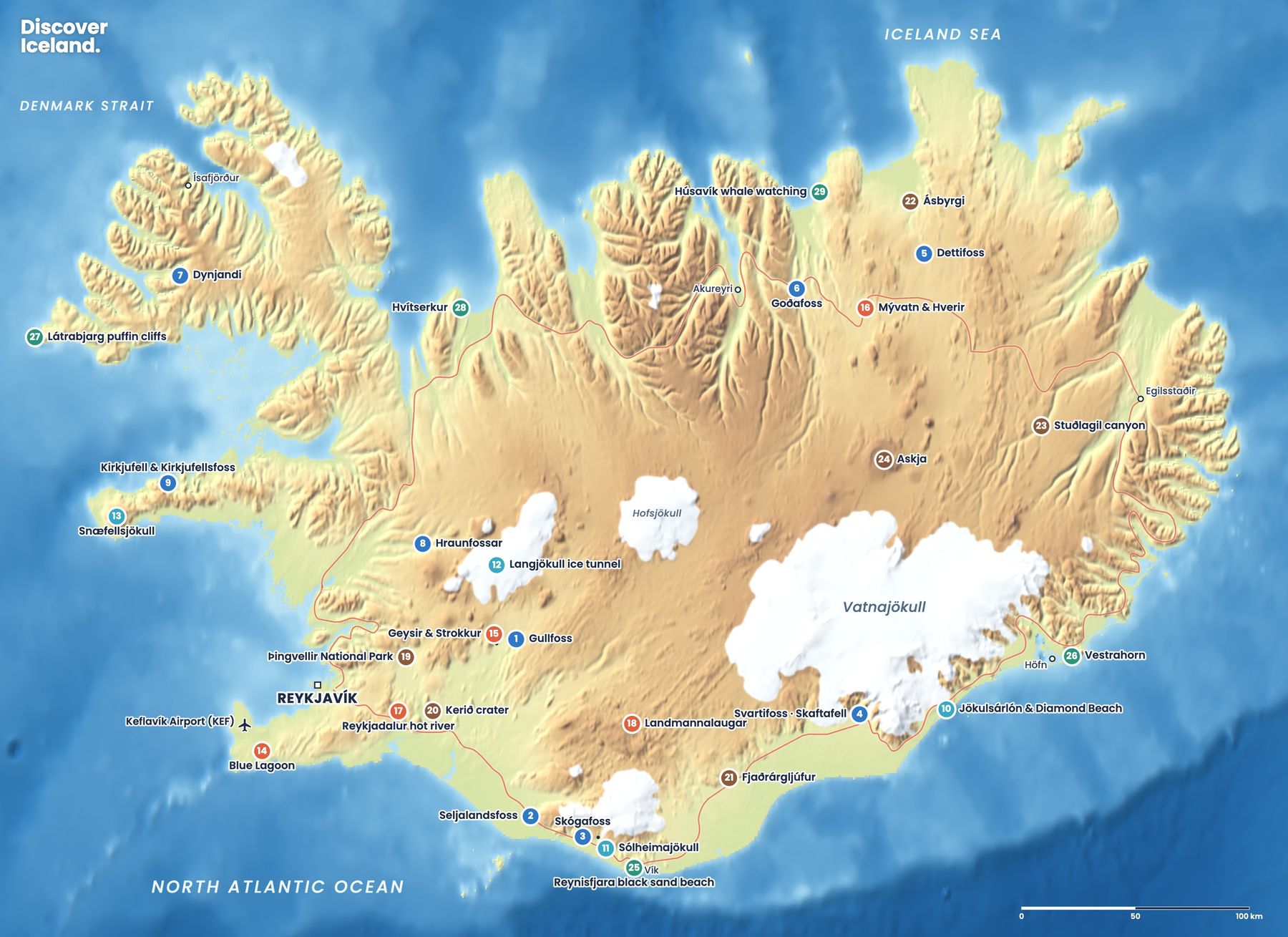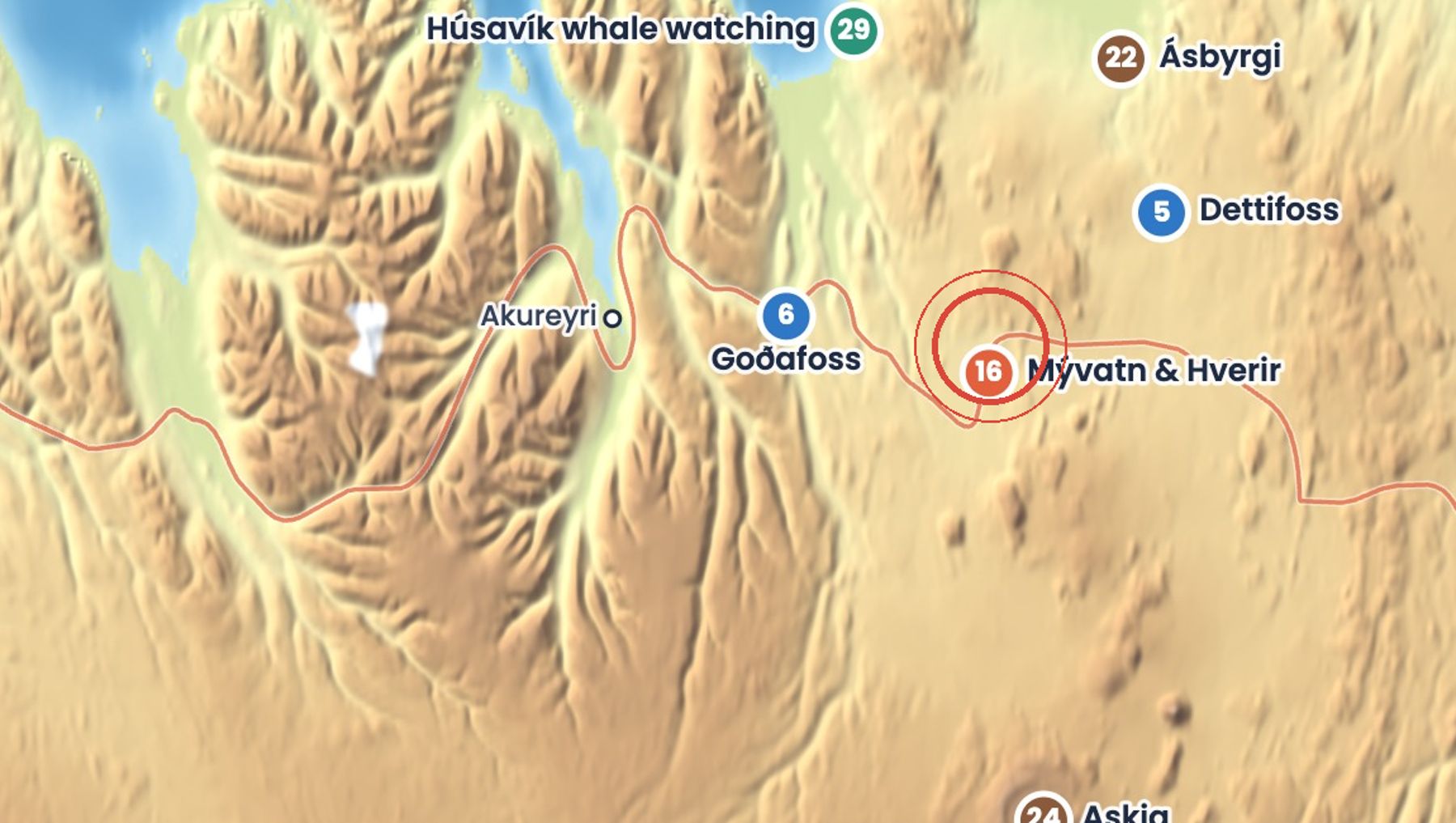
Mývatn is a shallow lake of about 37 km² formed by a lava eruption some 2,300 years ago. Its shores are full of volcanic shapes: the pseudocraters at Skútustaðir, the lava pillars of Dimmuborgir and the tephra cone of Hverfjall. More species of duck breed here than anywhere else in Europe.
About 6 km east of Reykjahlíð, beside Route 1, is Hverir, a geothermal field below Námafjall with hissing steam vents, boiling mud pools and yellow and red ground.
Getting there
Route 1 runs past the lake, and Reykjahlíð village on the north-east shore has fuel, shops and places to stay. A road circles the lake. Hverir is a few minutes' drive east of Reykjahlíð on Route 1, with paid parking and no toilets or other facilities.
When to go
All year. Midges swarm from June to August, so a head net helps on calm days. Winter is cold and dark, but the steam, snow and northern lights make it worth the trip; check road conditions first.
Good to know
- At Hverir, stay on the marked paths and inside the ropes: the ground is thin and the mud is boiling.
- Plan a full day to see the lake, Dimmuborgir, Hverfjall and Hverir.
- Bring a midge head net in summer.
- End the day in the Mývatn Nature Baths, just east of Reykjahlíð.
Sources: Mývatn, Wikipedia, Reykjahlíð, Wikipedia, Námafjall Geothermal Area, Guide to Iceland, Guide to Lake Mývatn, Perlan. Facts checked October 2026.
Drive times are approximate and depend on weather and road conditions. Check road.is and vedur.is before you set off.